
Divine Feminine Art as Embodied Tantric Awakening
Nearly two out of three American women report feeling disconnected from their bodies at some point in their adult lives. For spiritual women worldwide, this pain runs deep, echoing ancestral wounds and modern pressures to separate sensuality from spiritual practice. Exploring divine feminine art and tantric wisdom offers a radical invitation to reclaim the body, awaken sacred energy, and honor every aspect of your creative and sexual power.
Table of Contents
- Defining Divine Feminine Art And Tantra
- Sacred Embodiment And Creative Process
- Releasing Shame And Healing Sexual Blockages
- Integrating Sensuality With Spiritual Practice
- Navigating Triggers And Honoring Boundaries
Key Takeaways
| Point | Details |
|---|---|
| Divine Feminine Art | This art form serves as a sacred ritual, focusing on embodiment and spiritual growth through creativity. |
| Sacred Embodiment | It emphasizes emotional integration and the recognition of the body as a transformative instrument for self-discovery. |
| Releasing Sexual Shame | Healing sexual shame involves a somatic approach that dismantles generational trauma and empowers women’s autonomy. |
| Sensuality and Spirituality Integration | Embracing sensuality as sacred enhances spiritual practice, allowing for the transformation of energy into deeper consciousness. |
Defining Divine Feminine Art and Tantra
Divine feminine art transcends traditional artistic expression, representing a profound spiritual practice rooted in ancient tantric traditions. This embodied approach views art not merely as aesthetic creation, but as a transformative portal for healing, awakening, and reconnecting with sacred feminine energy. Tantric practices have historically celebrated feminine divine power, viewing art as a ritualistic pathway to understanding deeper spiritual connections.
At its core, tantric divine feminine art emerges from an understanding that creativity itself is a manifestation of Shakti - the primordial cosmic energy representing feminine power. Unlike Western art traditions that often objectify or commodify feminine representation, tantric art sees the feminine as a living, breathing energy capable of profound transformation. Ancient Indic religious traditions link Tantra intimately with feminine divine symbolism, exploring complex spiritual landscapes where art becomes a conduit for inner awakening.
This art form is fundamentally about embodiment - a radical practice of presence that invites women to reclaim their bodies, sexuality, and creative potential as sacred instruments of spiritual growth. It challenges historical narratives of shame by presenting the feminine form as a powerful, multidimensional expression of life force. Through painting, sculpture, movement, and ritual, divine feminine art creates safe spaces for emotional release, trauma healing, and spiritual reconnection.
This table distinguishes Western vs. Tantric representations of the feminine in art:
| Aspect | Western Tradition | Tantric/Divine Feminine Art |
|---|---|---|
| Representation | Often objectified | Celebrated as living energy |
| Artistic Purpose | Aesthetic or commercial focus | Spiritual and transformative |
| View of Female Body | Subject for external gaze | Portal for healing and wisdom |
| Relationship to Spirituality | Frequently separated | Deeply integrated |
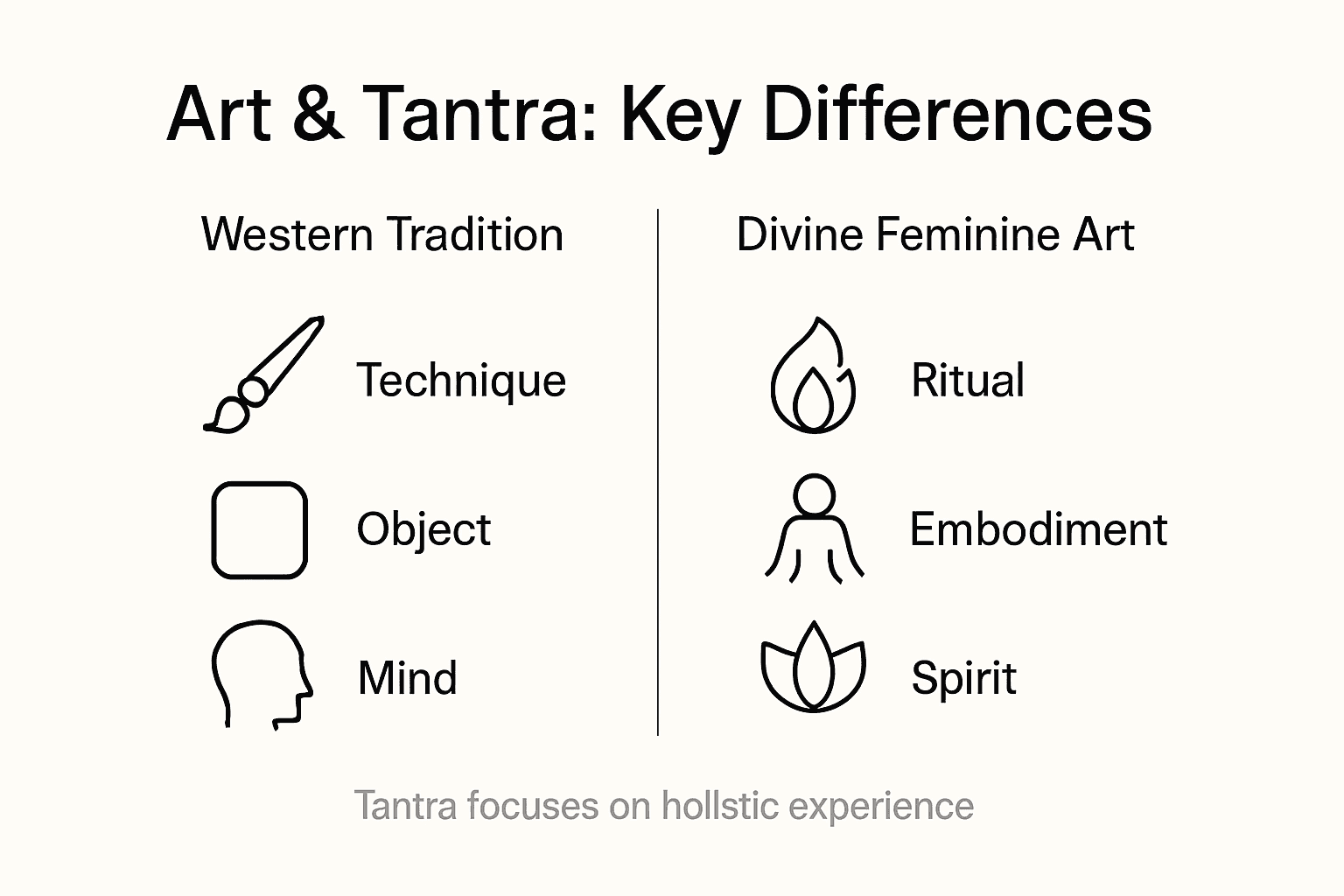
Pro Tip: Begin your divine feminine art practice by creating a personal altar or sacred space that honors your body’s wisdom and creative potential.
Sacred Embodiment and Creative Process
Sacred embodiment within divine feminine art represents a profound spiritual practice where creativity becomes a transformative conduit for inner awakening. Tantric art acts as a visual metaphysics, merging spiritual philosophy with creative expression, allowing artists to translate metaphysical experiences into tangible artistic forms. This approach goes beyond aesthetic creation, viewing the creative process itself as a sacred ritual of self-discovery and spiritual transmission.
The creative process in divine feminine art is fundamentally about nervous system regulation and emotional integration. Artists engage with their work as a form of energetic healing, using symbolic language, ritual motifs, and metaphysical themes to manifest spiritual realities. Tantra presents artistic practice as an esoteric journey of spiritual awakening, where each brushstroke, movement, or sculptural form becomes a meditation on consciousness and feminine power.
Understanding sacred embodiment means recognizing art as a living, breathing dialogue between the creator and cosmic energy. It involves releasing stored trauma, reconnecting with ancestral wisdom, and honoring the body as a sacred instrument of creative expression. Through intentional creative practices, women reclaim their innate power, transforming personal narratives of oppression into powerful statements of self-determination and spiritual sovereignty.

Pro Tip: Create a personal ritual around your artistic practice, incorporating breathwork, movement, or sound to help ground your creative energy and invite deeper spiritual connection.
Releasing Shame and Healing Sexual Blockages
Healing sexual shame represents a profound journey of reclaiming personal power and dismantling generational trauma embedded within the female body. Tantric rituals offer transformative pathways for overcoming societal sexual taboos, inviting women to transmute internalized narratives of oppression into empowered spiritual awakening. This healing process is not about performative liberation, but a deep, cellular recalibration of one’s relationship with sexual energy and personal sovereignty.
The nervous system plays a critical role in releasing sexual blockages, requiring gentle, compassionate approaches that honor the body’s inherent wisdom. Traumatic experiences often create protective mechanisms that manifest as physical tension, emotional numbness, or psychological disconnection. Divine feminine practices recognize these protective layers as intelligent survival strategies, approaching healing through radical acceptance, somatic experiencing, and intentional energy work. By creating safe, non-judgmental spaces for exploration, women can gradually unwind deeply held patterns of shame and reconnect with their innate sensual aliveness.
Healing sexual blockages demands a holistic approach that integrates emotional, physical, and spiritual dimensions. This means moving beyond talk therapy into embodied practices that allow suppressed energies to surface, be witnessed, and ultimately transformed. Techniques like breathwork, intuitive movement, sound healing, and sacred self-touch can help release stored trauma, rewriting old narratives of powerlessness and reclaiming the body as a sacred temple of wisdom and pleasure.
Pro Tip: Create a personal ritual of self-compassion by developing a gentle touch practice that allows you to reconnect with your body without expectation or judgment.
Integrating Sensuality With Spiritual Practice
Tantra presents a revolutionary approach to spiritual practice that transcends traditional dualistic separations between sensuality and spirituality, inviting practitioners to embrace their embodied experiences as sacred pathways of awakening. This integration challenges Western spiritual paradigms that often view the body and sexual energy as obstacles to enlightenment, instead positioning sensual awareness as a profound portal to deeper consciousness and self-understanding.
The Kundalini energy represents the quintessential bridge between sensual and spiritual experiences, offering a transformative approach to personal awakening. Kundalini Tantra introduces a non-binary model of divine feminine energy that moves beyond restrictive gender constructs, allowing practitioners to experience spiritual connection through embodied sensation. This approach recognizes sensuality not as a distraction from spiritual growth, but as a powerful, intelligent force of transformation that can activate profound healing and spiritual expansion.
Integrating sensuality with spiritual practice requires cultivating deep presence, radical self-acceptance, and a willingness to experience the full spectrum of bodily sensations without judgment. It involves developing sensitivity to subtle energy currents, learning to transmute sexual energy into spiritual fuel, and recognizing that every sensation carries potential for deeper awareness. Through practices like conscious breathwork, mindful movement, and intentional touch, practitioners can learn to dance between states of arousal and meditation, transforming sexual energy into a conscious, creative force.
Pro Tip: Create a daily embodiment practice that involves slow, intentional movement and breath awareness, allowing yourself to experience sensation without needing to categorize or control it.
Navigating Triggers and Honoring Boundaries
Sacred feminine practices demand profound sensitivity to individual emotional landscapes and energetic boundaries, recognizing that healing is not a universal, one-size-fits-all journey. Each woman’s path of spiritual awakening is unique, carrying its own intricate terrain of past traumas, generational wounds, and personal vulnerabilities. Navigating this landscape requires radical compassion, deep listening, and an unwavering commitment to consent and personal agency.
The nervous system acts as a sophisticated wisdom keeper, holding memories and protective mechanisms that emerge as triggers during spiritual and somatic work. Engaging with the Divine Feminine archetype necessitates a gentle, trauma-informed approach that honors individual healing processes, acknowledging that what feels expansive for one person might feel overwhelming for another. Creating safe containers means developing keen emotional intelligence, recognizing subtle energetic shifts, and respecting each individual’s autonomy to pause, retreat, or redirect their experience.
Honoring boundaries in divine feminine practice is not about creating rigid structures, but cultivating a fluid, responsive relationship with one’s inner landscape. This involves developing nuanced self-awareness, learning to distinguish between growth-oriented discomfort and genuine overwhelm, and creating personal rituals that support emotional regulation. Practices like somatic tracking, nervous system resourcing, and intentional pause points can help practitioners navigate potentially triggering material with grace, self-compassion, and empowered discernment.
Pro Tip: Develop a personal boundary ritual that includes a physical gesture or verbal affirmation you can use to pause, resource yourself, and reclaim sovereignty in any healing or spiritual practice.
Here’s a summary of core concepts in divine feminine art and tantric practice:
| Concept | Main Focus | Transformation Approach | Unique Aspect |
|---|---|---|---|
| Divine Feminine Art | Embodiment and spiritual awakening | Healing through creative process | Views art as sacred ritual |
| Sacred Embodiment | Presence in physical and energetic body | Emotional integration via art | Connects creativity to selfhood |
| Releasing Sexual Shame | Dismantling generational trauma | Somatic and energy-based healing | Honors body’s wisdom and power |
| Sensuality-Spirituality | Integrating body and spirit | Transmuting energy through Ritual | Recognizes sensuality as sacred |
| Boundary Navigation | Emotional safety and autonomy | Consent and somatic awareness | Responsive, individualized care |
Awaken Your Sacred Power Through Divine Feminine Art
Are you seeking to heal sexual shame, release deep-seated trauma, or integrate your sensuality with spirituality? This article explores how Divine Feminine Art grounded in tantric traditions can serve as a transformative practice to reconnect with your body, life force, and inner truth. The challenge of navigating triggers and honoring boundaries while embracing sacred embodiment calls for art that supports emotional integration and nervous system regulation.

Discover how original paintings and ritual-based creations at Art By Shakt can act as living portals for your own tantric awakening. Each piece is infused with divine feminine energy and Kundalini power to help you reclaim your sexuality as sacred, challenge patriarchal narratives, and experience healing through embodiment. Visit Art By Shakt today to explore artwork crafted for spiritual seekers longing for authentic self-connection and empowered feminine presence.
Embrace your journey now and let art be your energetic ally in awakening deeper layers of your sensual and spiritual self.
Frequently Asked Questions
What is divine feminine art?
Divine feminine art is an artistic expression rooted in tantric traditions, focusing on healing, awakening, and reconnecting with sacred feminine energy. It transcends traditional aesthetics and serves as a transformative practice.
How does tantra relate to divine feminine art?
Tantra intimately connects feminine divine power with artistic expression, viewing art as a sacred ritual that facilitates spiritual understanding and deeper connections with oneself.
What techniques can help release sexual shame through divine feminine practices?
Techniques such as breathwork, intuitive movement, sound healing, and sacred self-touch can help release buried trauma and transform narratives of shame, allowing for personal empowerment and spiritual awakening.
How can I integrate sensuality into my spiritual practice?
Integrating sensuality involves cultivating awareness of bodily sensations, using practices like conscious breathwork and intentional movement to experience sensuality as a powerful force for spiritual growth and transformation.