
Healing with Sacred Art: Unlock Your Inner Power Now
Arranging candles and crystal grids is only one layer of true healing. To genuinely transform your life, a sacred space must become a vessel for your deepest intentions and emotional freedom. Across history, carefully designed sacred environments have enabled personal restoration and empowerment. This guide reveals how to prepare a healing setting that feels nurturing and uniquely yours, blending ancient wisdom with modern energetic art so you can anchor divine feminine energy and explore your own journey of shadow integration.
Table of Contents
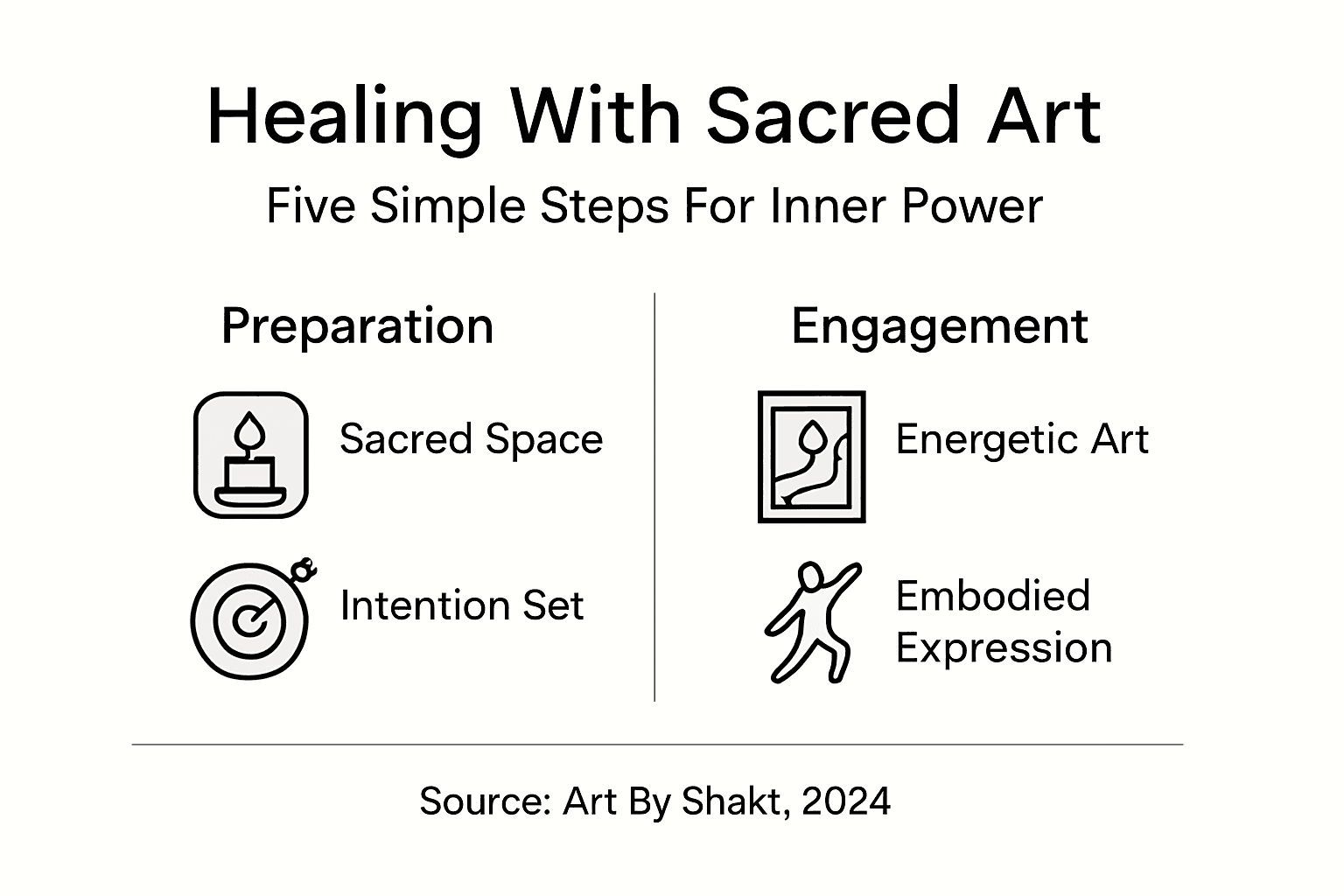
- Step 1: Prepare Your Sacred Space for Healing
- Step 2: Set Clear Intentions for Sacred Art
- Step 3: Engage with Energetic Art Practices
- Step 4: Integrate Embodied Expression in Creation
- Step 5: Reflect and Anchor Your Healing Experience
Quick Summary
| Key Insight | Explanation |
|---|---|
| 1. Create a Safe Healing Space | Design your physical environment to support emotional and spiritual restoration through intentional decoration and clarity. |
| 2. Set Clear Artistic Intentions | Define your purpose for creating art to guide your healing process and align your creativity with your emotional exploration. |
| 3. Engage in Energetic Art Practices | Use various artistic methods to openly express your emotions and facilitate release, turning art into a therapeutic tool. |
| 4. Incorporate Embodied Expression | Allow your body and senses to participate in art-making for a deeper emotional connection and richer creative experience. |
| 5. Reflect on Your Artistic Journey | Take time to analyze your artwork for insights, reinforcing personal transformation and understanding of your healing process. |
Step 1: Prepare Your Sacred Space for Healing
Creating a sacred healing space is more than just arranging furniture or lighting candles. It is an intentional process of transforming your physical environment into a powerful container for personal transformation. Sacred spaces facilitate deep healing by providing a supportive energetic landscape where emotional and spiritual restoration can occur.
To design your sacred healing space, start by selecting a quiet area where you feel safe and undisturbed. This could be a corner of your bedroom, a dedicated meditation room, or even a peaceful outdoor location. Clear the space physically by removing clutter and energetically by using sage smudging, sound healing with bells or singing bowls, or intentional breathwork. Your goal is to create an environment that feels nurturing and supports your healing journey.
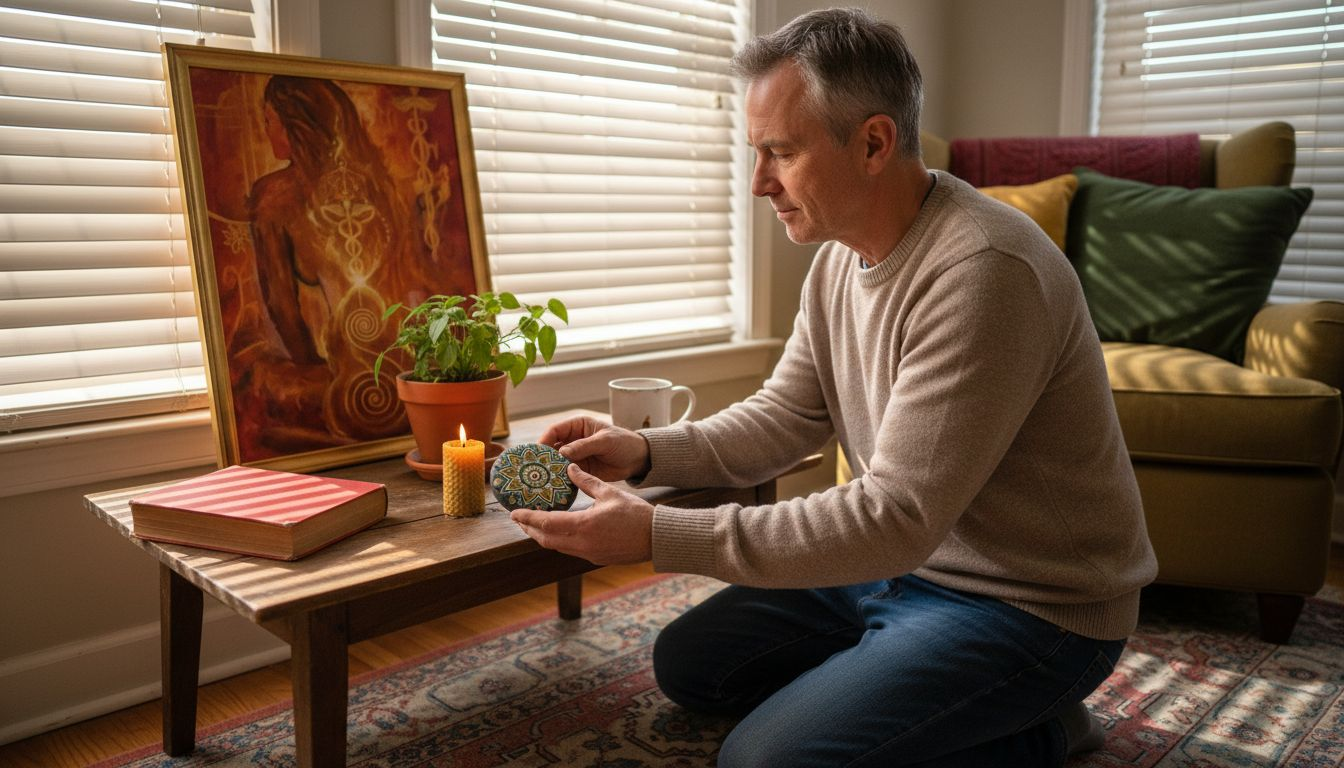
Consider incorporating elements that resonate with your personal healing intention. This might include meaningful artwork, healing crystals, soft textiles, natural objects like stones or feathers, or images that represent your spiritual path. The key is to create a space that feels deeply personal and speaks to your soul’s journey of restoration and empowerment.
Pro tip: Choose objects and colors that make you feel grounded, safe, and connected to your inner wisdom during your healing process.
Step 2: Set Clear Intentions for Sacred Art
Setting clear intentions is the energetic foundation of your sacred art creation process. Artistic intention transcends mere visual representation and becomes a powerful conduit for personal transformation and healing.
Begin by creating a quiet moment of reflection where you can connect deeply with your inner self. Ask yourself what emotional landscape or healing journey you want to explore through your sacred art. Are you seeking to release old wounds? Celebrate personal growth? Reconnect with your divine feminine energy? Your intention should be specific yet expansive enough to allow organic creativity and spiritual emergence. Write down your intention in a journal or speak it aloud as a sacred invocation that bridges your inner world with your artistic expression.
Visualize your intention as a living energy that will flow through your creative process. This means allowing your art to become a dynamic conversation between your conscious desire and your intuitive wisdom. Trust that your sacred art will reveal layers of meaning beyond your initial intention, creating a transformative experience that goes far beyond the physical artwork itself.
Pro tip: Create a simple ritual before starting your art practice that grounds your intention and opens a sacred energetic space for creative flow.
Step 3: Engage with Energetic Art Practices
Neural mechanisms activated during artistic engagement reveal that creative expression is far more than a simple aesthetic experience. Energetic art practices are powerful therapeutic tools that invite you to explore healing through intentional creative movement, visualization, and emotional release.
Begin by selecting an art medium that resonates with your current emotional state and healing intention. This could be intuitive painting, where you allow colors and brushstrokes to flow without judgment, spontaneous movement that expresses your inner landscape, or rhythmic drawing that helps you process complex emotions. Pay attention to the sensations in your body as you create. Notice how certain colors, textures, or movements trigger emotional responses or release stagnant energy. Your artistic practice becomes a dialogue between your inner world and external expression.
Remember that energetic art is not about creating a perfect piece but about experiencing the transformative process. Allow yourself to be fully present with whatever emerges during your practice. Some sessions might feel intense and cathartic, while others could be gentle and reflective. Trust that each creative moment is a step toward deeper self understanding and healing.
Compare popular energetic art mediums and their potential therapeutic effects:
| Art Medium | Emotional Focus | Healing Effect |
|---|---|---|
| Intuitive Painting | Emotional release | Reduces anxiety, boosts clarity |
| Movement/Dance | Body expression | Releases tension, inspires joy |
| Rhythmic Drawing | Emotional processing | Clarifies complex feelings |
Pro tip: Create a dedicated playlist or soundscape that supports your energetic art practice and helps you stay connected to your emotional journey.
Step 4: Integrate Embodied Expression in Creation
Embodied creativity extends far beyond traditional artistic approaches, inviting you to explore art as a profound physical and emotional experience. Integrating embodied expression means allowing your entire being to participate in the creative process your body, emotions, and intuition becoming active collaborators in artistic manifestation.
Start by creating a physical environment that supports unrestricted movement and sensory exploration. Remove constraints like rigid chairs or tight clothing that might limit your natural impulses. Consider practicing your art standing up, moving freely, or even dancing between creative moments. Pay attention to the sensations in your body as you create subtle tensions, emotional flows, and energetic shifts that want to be expressed through color, shape, or movement. Your art becomes a living language of your inner landscape, translating complex emotional experiences into visual or kinesthetic forms.
Trust that your body holds wisdom beyond intellectual understanding. Some artistic expressions might emerge as spontaneous gestures, rhythmic brushstrokes, or intuitive color selections that seem to flow through you rather than from you. Surrender to these moments of pure creative energy, allowing yourself to be both the creator and the instrument of expression.
Pro tip: Create a dedicated space where you can move freely and make mess without judgment, giving yourself complete permission to explore embodied creativity.
Step 5: Reflect and Anchor Your Healing Experience
Art therapy provides profound pathways for healing reflection by transforming internal emotional landscapes into tangible visual expressions. This final stage of your sacred art journey invites you to pause and witness the powerful healing narrative you have created through your artistic process.
Begin by setting aside dedicated time to sit with your completed artwork. Approach your piece with gentle curiosity rather than critical judgment. Notice the colors, shapes, and textures that emerged during your creative practice. Ask yourself reflective questions like What emotions are present in this piece? What parts of myself feel seen or heard through this creation? Write down your observations in a journal or speak them aloud, allowing your verbal processing to complement your visual expression.
Recognize that reflection is not about analyzing your art technically but about understanding the deeper emotional and energetic shifts that occurred during your creative journey. Your artwork serves as a mirror revealing your inner healing process. Some insights might feel immediate and clear while others may unfold gradually over time. Trust that each viewing of your sacred art will reveal new layers of meaning and personal transformation.
Pro tip: Create a small ritual around your reflection process by lighting a candle and creating a sacred space that honors the healing work you have undertaken.
Here’s a summary of how each step in the sacred art healing process contributes to personal transformation:
| Step | Main Focus | Unique Benefit |
|---|---|---|
| Prepare Sacred Space | Setting up healing environment | Creates supportive and nurturing energy |
| Set Clear Intentions | Defining artistic purpose | Aligns creative action with deep healing |
| Engage Energetic Art | Using expressive methods | Facilitates emotional and energy release |
| Embodied Expression | Involving the whole body | Enhances mind-body emotional connection |
| Reflect & Anchor | Processing and integrating | Deepens self-awareness and insight |
Unlock Your Inner Power Through Sacred Art and Embodiment
If you are seeking to heal emotional wounds and reconnect with your deepest self through the transformative process of sacred art this is the path for you. The article highlights challenges such as creating a nurturing space, setting clear intentions, and engaging in embodied expression to release stagnant energy and awaken inner wisdom. These key steps resonate deeply with the journey of reclaiming your body and spiritual power by integrating divine feminine energy and shadow healing.
At Art By Shakt you will find original paintings and ritual-based art created as living portals to support your grounding and healing process. This artwork bridges spirituality and sensuality offering energetic tools to challenge limiting cultural narratives while honoring your sacred embodiment and kundalini awakening. Experience art that helps you reclaim your body as a temple and invites authentic self-connection.
Take the next step now to deepen your healing journey and remember your power with art designed for transformation and presence.
Discover how original paintings and commissioned works can create a sacred environment for your personal restoration.

Explore the powerful union of spirit and body with art that supports every step of your sacred healing process. Visit Art By Shakt today and claim your connection to embodied creativity and divine feminine energy.
Frequently Asked Questions
How can I prepare my sacred space for healing with sacred art?
To prepare your sacred space, select a quiet area where you feel safe and undisturbed. Clear the physical and energetic clutter by removing distractions and using rituals like sage smudging to create a nurturing environment.
What intentions should I set for my sacred art practice?
Set specific, expansive intentions that resonate with your current healing journey, such as releasing old wounds or celebrating personal growth. Write your intention down or speak it aloud to solidify your focus as you begin creating.
How do I engage with energetic art practices effectively?
Engage with energetic art practices by choosing an art medium that speaks to your emotional state and allowing your creative expression to flow freely. Pay attention to your body sensations, and let your artistic experience guide you without aiming for perfection.
What is the importance of embodied expression in sacred art?
Embodied expression enhances your creative process by involving your entire being—body, emotions, and intuition. Create a space where you can move freely and instinctively explore your emotions through artistic forms without limitations.
How should I reflect on my artwork after completing it?
After completing your artwork, set aside time to observe it with curiosity rather than judgment. Ask yourself reflective questions about the emotions and insights that arise, and write down your observations to deepen your self-awareness and anchor your healing experience.