
How to Use Art for Healing: A Step-by-Step Ritual Guide
More than 60 percent of American adults say creative practices help them cope with stress, yet many spiritual seekers still struggle to find lasting transformation through art. When the desire to heal and integrate the shadow meets the ancient power of the divine feminine, art becomes much more than a hobby. This guide reveals exactly how intentional art rituals can shift your emotional landscape and build a daily foundation for deeper self discovery.
Table of Contents
- Step 1: Set An Intention For Healing
- Step 2: Create A Sacred Ritual Space
- Step 3: Connect With Your Body And Breath
- Step 4: Express Emotions Through Artmaking
- Step 5: Reflect On Your Artwork’s Message
- Step 6: Integrate Healing Insights Daily
Quick Summary
| Key Insight | Explanation |
|---|---|
| 1. Set a Clear Intention | Define your healing focus to guide your emotional exploration and creative process effectively. |
| 2. Create a Sacred Space | Transform an ordinary area into a sanctuary that fosters safety and inspiration during your art practice. |
| 3. Connect with Your Body | Cultivate somatic awareness through intentional breath and movement, unlocking deeper emotional insights. |
| 4. Express Through Art | Use artistic expression to translate complex emotions into tangible forms, fostering emotional processing. |
| 5. Reflect on Your Artwork | Engage in reflective practices to decode the meanings within your art, supporting personal insights and integration. |
Step 1: Set an Intention for Healing
In this step, you will create a powerful energetic foundation for your art healing journey by setting a clear, meaningful intention that guides your creative process and personal transformation. Your intention serves as an emotional compass that directs your artistic exploration toward healing and self discovery.
Beginning your healing art practice starts with tuning into your innermost emotional landscape and identifying the specific healing energy you want to cultivate. Art therapy research demonstrates that intentional creative expression can promote mental health and emotional resilience. Ask yourself deep questions: What emotional wounds are you seeking to address? What parts of yourself need gentle acknowledgment and integration?
To set your intention, find a quiet space where you can connect with your inner wisdom. Close your eyes and breathe deeply. Place your hand on your heart and allow whatever healing intention wants to emerge to surface naturally. Your intention might be a single word like “release,” “compassion,” or “strength,” or a more nuanced phrase that captures your emotional journey. Emerging research highlights how intentional art therapy helps individuals channel emotional energy effectively and supports trauma processing through creative modalities.
Pro tip: Write your intention on a small piece of paper and place it near your art workspace as a gentle reminder of your healing purpose during your creative practice.
Step 2: Create a Sacred Ritual Space
In this step, you will transform an ordinary space into a sanctuary of healing and creative potential that supports your art therapy journey. Your sacred ritual space becomes a powerful container for emotional exploration and personal transformation.
Designing a sacred ritual space involves intentionally curating an environment that feels both safe and inspiring. Start by selecting a quiet area where you will not be interrupted. This could be a corner of your bedroom, a dedicated studio space, or even a peaceful outdoor location. Clear away physical clutter to create energetic spaciousness. Consider using elements that resonate with your healing intention sage for cleansing, crystals for focus, soft textiles for comfort, or meaningful artwork that reflects your inner landscape.
Prepare your space with mindful attention. Light a candle to mark the transition into your creative ritual. Arrange your art materials nearby so they feel inviting and accessible. Create a small altar or focal point with objects that represent your healing journey. This might include photographs, natural objects like stones or feathers, or personal talismans that hold emotional significance. Take a few deep breaths and invite a sense of reverence and openness into your carefully crafted space.
Pro tip: Keep a special blanket or shawl in your ritual space that you only use during your art healing practice to help signal to your nervous system that this is a time for gentle transformation.
Step 3: Connect with Your Body and Breath
In this step, you will learn to cultivate a deep somatic awareness that transforms your art healing practice from an external activity into a profound internal journey of emotional exploration and release. Your body holds wisdom that words often cannot express.
Somatic therapy techniques emphasize reconnecting with the body through intentional breath and movement. Begin by finding a comfortable seated position where your spine can be long and supported. Close your eyes and place one hand on your heart and another on your belly. Notice the gentle rise and fall of your breath without trying to change anything. Feel the rhythm of your inner landscape. This simple act of witnessing creates a bridge between your conscious mind and the deeper emotional territories stored within your physical form.
As you continue breathing, explore different breathing patterns that support your emotional state. Somatic breathwork offers multiple approaches to help regulate your nervous system and release stored tension. Try a practice called “box breathing” where you inhale for four counts, hold for four counts, exhale for four counts, and pause for four counts. This rhythmic breathing helps calm your mind and creates a safe internal container for whatever emotions might emerge during your art healing practice.
Pro tip: Keep a soft, comfortable blanket nearby to wrap yourself in after your breathwork session, providing a sense of safety and grounding.
Step 4: Express Emotions Through Artmaking
In this step, you will transform your internal emotional landscape into a tangible creative expression, using art as a powerful healing language that speaks beyond words. Your artistic process becomes a sacred dialogue between your inner world and external reality.
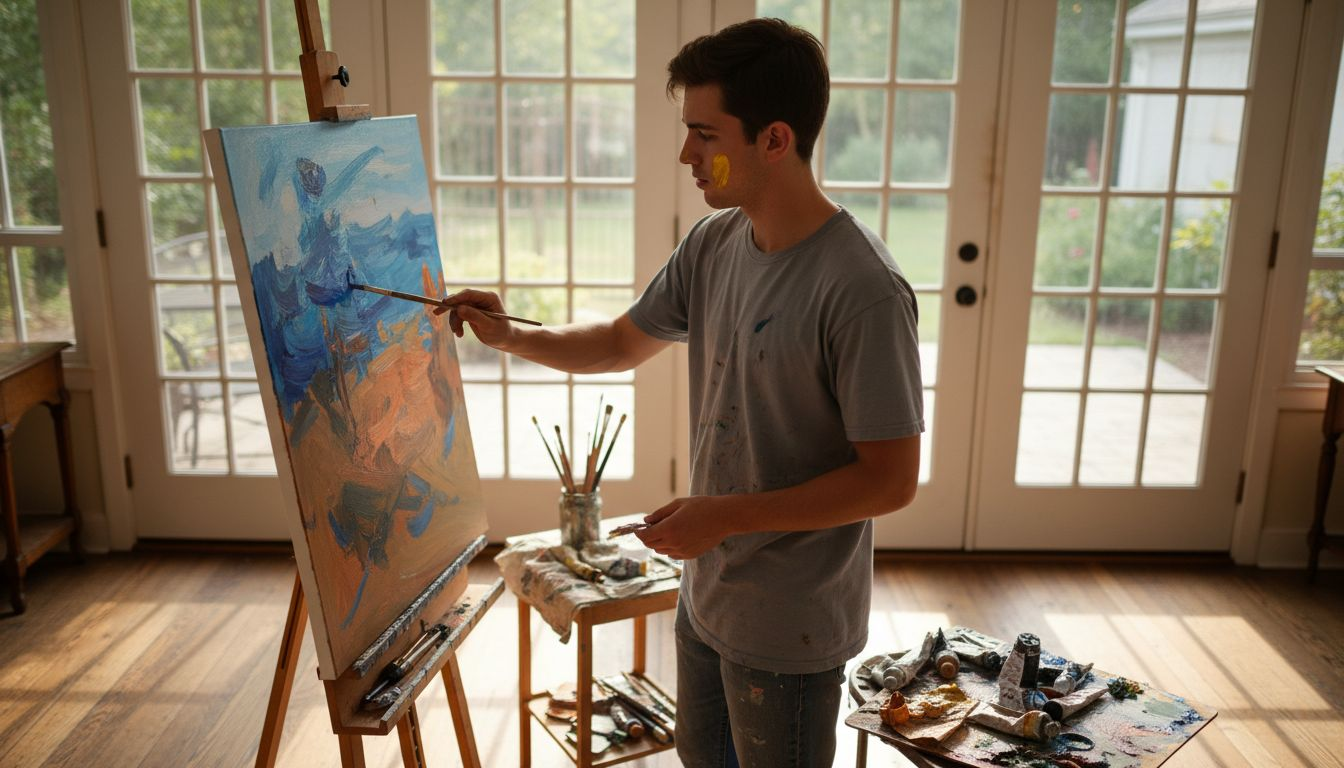
Art therapy facilitates profound emotional processing by allowing you to translate complex feelings into visual representations. Begin without judgment or expectation. Select materials that feel intuitively right the moment you touch them. This might be watercolors for fluid emotions, charcoal for intense feelings, or soft pastels for gentler sensations. Close your eyes and allow your hand to move spontaneously across the page. Let color, shape, and texture become the vocabulary of your emotional narrative.
Expressive arts therapy integrates multiple creative modalities to support deep emotional exploration. As you create, notice any physical sensations that arise. Are your brushstrokes aggressive or tentative? Does a particular color feel heavy or light? Observe without analyzing. Your art is a mirror reflecting your internal state, offering insights that cognitive understanding cannot always access. Trust the process and allow whatever wants to emerge to come forth without resistance.
Pro tip: Keep a journal nearby to write down any insights or emotions that surface during your artmaking, creating a complementary narrative to your visual expression.
Comparing expressive modalities used in art therapy:
| Modality | Typical Materials | Emotional Impact |
|---|---|---|
| Painting | Watercolors, acrylics | Release and transformation |
| Drawing | Charcoal, pencils | Clarity and intensity |
| Collage | Mixed media, photos | Integration and connection |
| Sculpture | Clay, objects | Grounding and embodiment |
Step 5: Reflect on Your Artwork’s Message
In this step, you will learn to decode the profound language of your artwork becoming a compassionate witness to your own healing journey. Your creative expression holds hidden wisdom waiting to be understood and integrated.
Reflection on artwork provides a conscious space for exploring the deeper meanings beneath your visual creation. Sit with your artwork and approach it with gentle curiosity. Ask yourself open ended questions. What colors emerged spontaneously? Were your brushstrokes soft or angular? Notice the emotional landscape that appears without judgment. Your art is a mirror reflecting your inner emotional terrain revealing aspects of yourself that verbal language cannot easily express.
Guided reflection helps clients translate visual and symbolic elements into meaningful personal insights. Allow yourself to write or speak about your artwork as if describing a dream. What emotions surface? What memories or sensations are connected to specific areas of your creation? Trust that your subconscious has communicated something important through this artistic process. There are no right or wrong interpretations only genuine personal revelations.
Pro tip: Create a small ritual around your reflection by lighting a candle and creating a quiet sacred space that honors the vulnerability of your creative exploration.
Step 6: Integrate Healing Insights Daily
In this step, you will transform your art healing practice from a singular experience into a sustainable ritual of ongoing personal growth and emotional nourishment. Your creative journey becomes a living, breathing pathway of self discovery and transformation.
Integrating art therapy practices into daily life supports continuous emotional regulation and well-being. Create small, consistent opportunities to honor your healing process. This might mean keeping a small sketchbook by your bedside, taking five minutes each morning to draw your emotional landscape, or collecting meaningful objects that remind you of your artistic insights. Develop micro rituals that keep you connected to the wisdom uncovered in your creative exploration.
Daily integration of art therapy insights nurtures ongoing healing through intentional artistic practices. Consider establishing a weekly reflection ritual where you review your artwork, journal about emerging patterns, or create a visual timeline of your emotional journey. Allow these practices to be fluid and responsive to your changing inner landscape. Remember that integration is not about perfection but about gentle, consistent connection to your healing path.
Pro tip: Create a dedicated digital or physical folder to archive your artwork and reflections as a tangible reminder of your transformative journey.
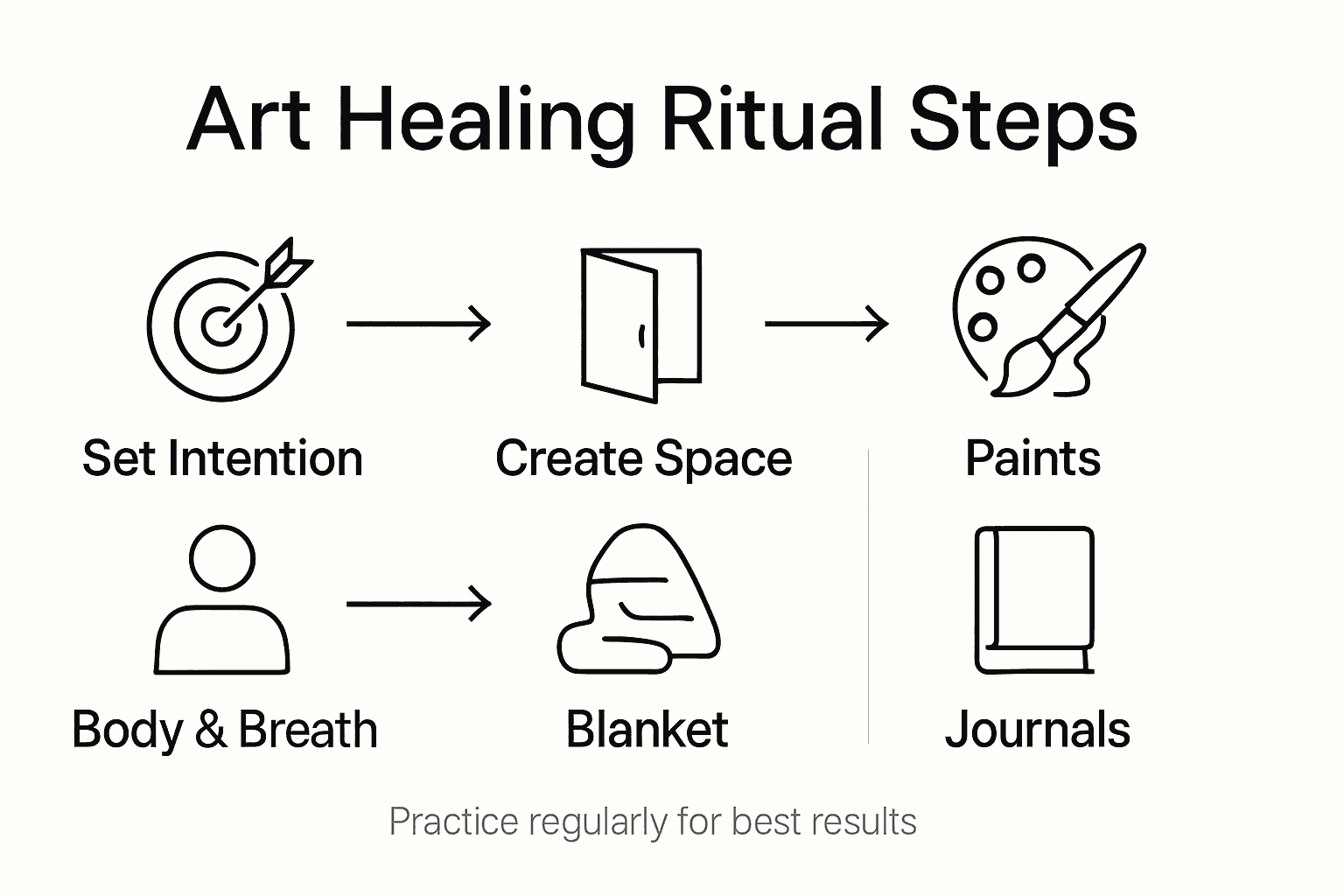
Here’s a summary of each art healing step and its core benefit:
| Step | Key Action | Main Benefit |
|---|---|---|
| Set Intention | Define healing focus | Guides emotional exploration |
| Ritual Space | Prepare creative sanctuary | Fosters safety and inspiration |
| Body & Breath | Practice somatic awareness | Unlocks deeper emotions |
| Artmaking | Transform emotions into art | Enhances emotional processing |
| Reflection | Decode artwork meaning | Supports integration and insight |
| Integration | Daily healing rituals | Sustains personal growth |
Discover Art as Your Path to Healing and Transformation
The step-by-step ritual guide highlights how intentional creative expression and somatic awareness help unlock emotional wounds and foster deep personal growth. If you feel called to reconnect with your body, life force, and inner truth while embracing sacred embodiment and shadow integration, exploring ritual-based art can be the powerful companion you need. Our collection of original paintings and commissioned works serve as living portals to support your healing journey and invite you to a fuller presence in your body and soul.

Experience the energetic support of art designed to ground, heal, and awaken your divine feminine energy and Kundalini potential. Visit Art By Shakt now to explore artwork rooted in transformation and sacred embodiment. Enhance your healing ritual by bringing home authentic pieces that resonate with your personal path. Start your journey today and let your healing art practice expand through unique creative portals.
Learn more about how art can nurture your soul by exploring original paintings and prints crafted for spiritual seekers longing for depth and presence.
Frequently Asked Questions
How do I set an intention for my art healing practice?
To set an intention for your art healing practice, find a quiet space where you can breathe deeply and connect with your inner self. Identify what emotional aspects you want to address, and write down a specific word or phrase that encapsulates your healing focus.
What should I include in my sacred ritual space for healing art?
Your sacred ritual space should contain elements that make you feel safe and inspired. Consider incorporating calming objects like candles, crystals, or meaningful artwork that resonates with your healing journey, while also ensuring that the area is clutter-free and inviting.
How can I connect with my body and breath during the art healing process?
To connect with your body and breath, find a comfortable seated position, close your eyes, and place your hands on your heart and belly. Focus on your breath for a few minutes, noticing its natural rhythm; you can also practice techniques like box breathing to deepen your emotional awareness and relaxation.
What is the best way to express emotions through art in my healing practice?
The best way to express emotions through art is to select materials that feel right to you and allow yourself to create without judgment. Start by moving your hand freely across the page, using colors, shapes, and textures to capture your emotions as they arise, letting the process guide your expression.
How do I reflect on the message of my artwork effectively?
To reflect on your artwork, sit quietly with it and ask yourself open-ended questions about the colors, shapes, and emotions that emerged. Write or speak your thoughts as if you were interpreting a dream, allowing yourself to discover personal insights without judgment or pressure.
How can I integrate the healing insights from my art into my daily life?
Integrate your healing insights by creating small daily rituals related to your art practice, like sketching in a journal or reviewing your artwork weekly. Aim to dedicate as little as five minutes each day to these activities, fostering ongoing emotional growth and connection to your healing journey.
Recommended
- Commissions · Personal Yoni Art · Protective Paintings – ART BY SHAKTI
- ART BY SHAKTI – ART BY SHAKTI
- Client Testimonial - Shakti Awakening – ART BY SHAKTI
- Custom Sacred Protection Painting - Energetic shield for you and your loved ones – ART BY SHAKTI
- Why Daily Rituals Matter for Inner Glow – EMILY SANDERS LIFESTYLE