
Soul-Centered Art: Reclaiming the Body and Spirit
Choosing art as a path to healing and self-discovery can feel both thrilling and intimidating for spiritual women navigating transformation. Exploring soul-centered art gives you more than creative satisfaction—it opens a portal to genuine empowerment, energetic connection, and sacred embodiment. As you turn inward and express your truth, art becomes a profound means to explore inner landscapes and support your spiritual journey, connecting you to generations of women who reclaim power through creativity amid change.
Table of Contents
- Defining Soul-Centered Art And Its Essence
- Types And Practices Of Soul-Centered Art
- How Soul-Centered Art Supports Healing
- Reclaiming The Sacred Feminine Through Art
- Risks, Challenges, And Misconceptions
Key Takeaways
| Point | Details |
|---|---|
| Soul-Centered Art Is Transformative | It channels inner truth and spiritual essence, promoting healing and self-awareness through creative expression. |
| Embodied Practice Is Essential | Regular engagement with soul-centered art fosters a deeper connection to one’s body and experiences, facilitating personal growth. |
| Shadow Integration Matters | Authentic art practice requires confronting uncomfortable emotions and integrating them into the creative process for true healing. |
| Reclaiming the Sacred Feminine | Artistic expression can challenge patriarchal narratives, helping to honor and celebrate feminine power and wisdom. |
Defining Soul-Centered Art and Its Essence
Soul-centered art operates from a fundamentally different premise than conventional art. It isn’t simply about creating something beautiful or technically skilled. Instead, it’s about channeling the deeper dimensions of your being—your consciousness, your spiritual essence, your inner truth—directly into visual form. When you engage with soul-centered art, whether as a creator or observer, you’re participating in something far more intimate than aesthetic appreciation. You’re accessing a direct pathway to healing, self-awareness, and spiritual awakening.
The essence of soul-centered art rests on the understanding that art serves as a profound means to explore inner landscapes. Expressions of soul-centered art span from prehistoric times to the present day, suggesting this impulse to translate spiritual experience into visual form is not new, yet remains urgently relevant today. What distinguishes soul-centered art is its unifying power—it transcends the separation between body and spirit, between the conscious and unconscious, between individual experience and collective healing. For you as a spiritual woman navigating life transitions, soul-centered art functions as a living portal. It doesn’t simply decorate a wall or occupy museum space. It works energetically, inviting you home into your body and soul while supporting your journey toward embodied wholeness.
This approach to art directly challenges how you’ve likely been taught to think about your body and sexuality. Traditional narratives, particularly those shaped by patriarchal structures, have positioned the female body as either sinful or as an object for external consumption. Soul-centered art reclaims your body as sacred—not through shame, but through reverence. It celebrates the sensual, the erotic, the embodied as legitimate expressions of spiritual consciousness. Your Kundalini energy, your divine feminine power, your life force itself becomes the subject and substance of the work. The soul’s expression in art persists across both secular and religious contexts as a life-giving, unifying essence, which means this work transcends any single spiritual tradition or belief system. Whether you draw from tantric philosophy, goddess consciousness, or your own intuitive knowing, soul-centered art holds space for your authentic expression.
What makes soul-centered art transformative for your healing is its commitment to shadow integration and honest embodiment. This isn’t art that bypasses difficulty or pretends everything is light. Rather, it invites you to witness and honor all parts of yourself—the shame you carry, the sensuality you’ve learned to hide, the rage at systems that diminished you, the longing for authentic connection. Through witnessing these truths reflected back in art, something shifts. Healing begins where shame dissolves. You move from disconnection toward presence, from fragmentation toward wholeness. The body becomes a trusted friend rather than a site of violation or shame. This reclamation is both personal and political, spiritual and embodied, individual and collective.
Here is a comparison of soul-centered art and traditional art to clarify their distinct intentions and outcomes:
| Aspect | Soul-Centered Art | Traditional Art |
|---|---|---|
| Primary Focus | Spiritual embodiment and healing | Technical skill or aesthetics |
| Creative Impulse | Inner truth and consciousness | External subjects or mastery |
| Impact on Viewer | Promotes self-awareness | Encourages appreciation |
| Approach to Body | Celebrates as sacred | Often objectifies or idealizes |
Pro tip: When encountering soul-centered art, pause and notice what arises in your body before analyzing the work intellectually—tension, warmth, tears, or expansion are often your soul communicating what needs healing.
Types and Practices of Soul-Centered Art
Soul-centered art manifests through diverse creative modalities, each offering a unique pathway for spiritual exploration and embodied healing. The practice isn’t limited to painting or sculpture—it encompasses any artistic form that channels your inner truth into tangible expression. Arts-based spiritual care uses visual, musical, dramatic, body, literary, and playful expression to support spiritual exploration, meaning you can access soul-centered art regardless of your creative background or preferred medium. What matters isn’t technical skill but rather your willingness to let your authentic self move through the work. Whether you’re drawn to painting figures of divine feminine energy, creating rituals with movement and sound, writing poetry that names your embodied truth, or crafting altars that hold your intentions, you’re practicing soul-centered art.
Within the visual arts, soul-centered art often focuses on the female body as sacred territory. This might involve creating paintings or drawings that celebrate sensuality, vulnerability, and power simultaneously. It could mean illustrating your Kundalini awakening, depicting the goddess within you, or rendering the textures of skin, breath, and presence as spiritual subjects worthy of reverence. Performance-based practices—dance, movement, vocal expression—function as soul-centered art when they emerge from your authentic desire to embody and express spirit through your body. Many spiritual women find that moving with intention, allowing sound to vibrate through their channels, or creating rituals that honor their cycles becomes a profound form of soul-centered art. Literary and contemplative practices also belong here. Writing your story, journaling through trauma and transformation, creating poetry that speaks your truth, or engaging in soulfulness-oriented contemplative practices that integrate psychological and spiritual dimensions all constitute soul-centered art. These modalities share a common thread: they require creativity, improvisation, and a commitment to deep authenticity.
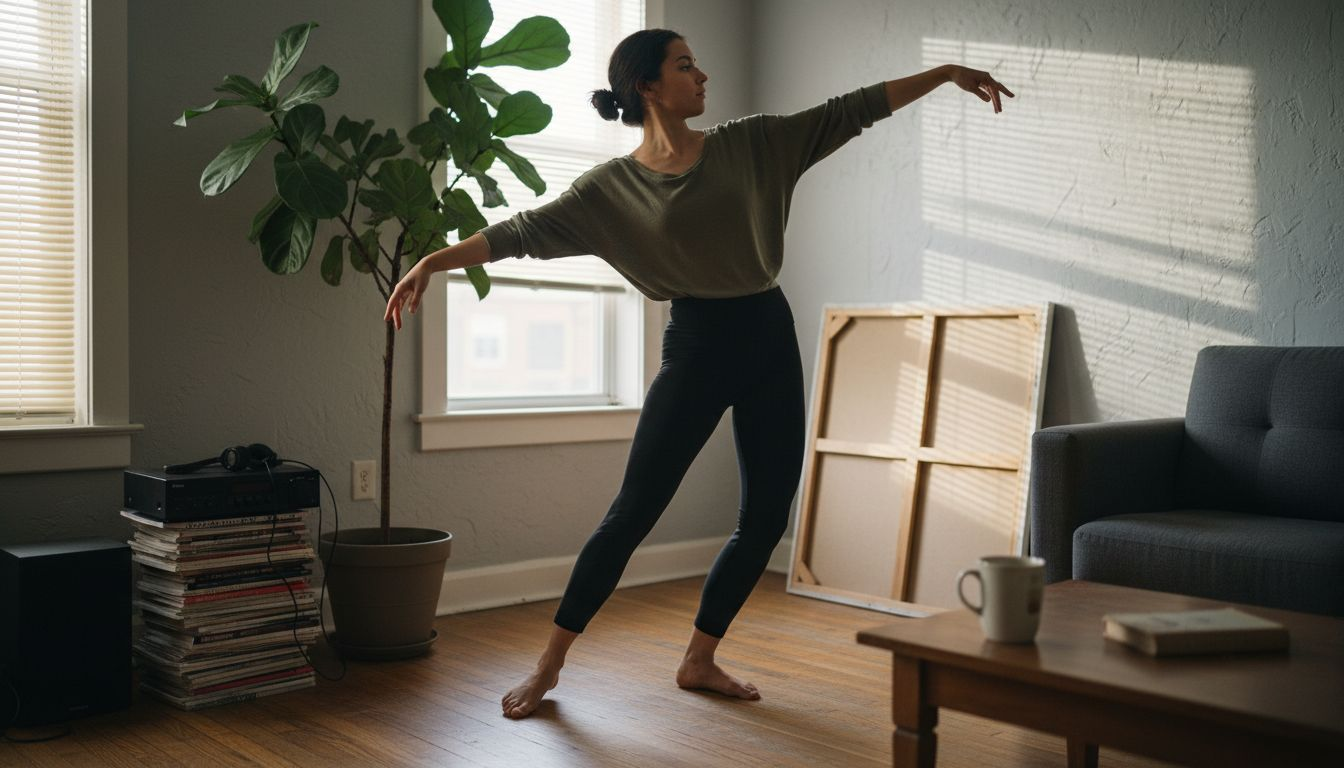
The practice of soul-centered art is deeply personal and culturally informed. What resonates with your healing journey may differ entirely from another woman’s path, and that’s exactly as it should be. If you’re drawn to Kundalini traditions, your practice might involve creating art specifically designed to activate and move energy through your body. If you work with goddess consciousness or feminine divine energy, your creations might center the reclamation of your power after patriarchal wounding. If shadow integration is your focus, you might create work that honors anger, grief, or shame as valid expressions of your full humanity. The key is that your practice adapts to meet your personal and cultural context, your current healing needs, and your spiritual orientation. There’s no “right” way to practice soul-centered art—only your way. The work becomes a living dialogue between your inner landscape and the material world, a conversation between your spirit and your body, a witnessing of your own becoming.
Meaningful engagement with soul-centered art involves more than occasional creation. It’s a contemplative practice, one that requires showing up repeatedly and intentionally. This might mean establishing a regular rhythm—a weekly painting practice, monthly ritual creation, daily movement, or seasonal creative cycles aligned with your menstrual phases or the seasons. The consistency matters because it deepens your connection to the work and allows transformation to unfold gradually. As you move through life transitions, your practice evolves too. What you created during heartbreak differs from what emerges in your reclamation. What you manifested during confusion differs from what you bring forth in clarity. Your soul-centered art becomes a mirror of your journey, a record of your healing, and a powerful tool for continuing to anchor yourself in your body and truth.
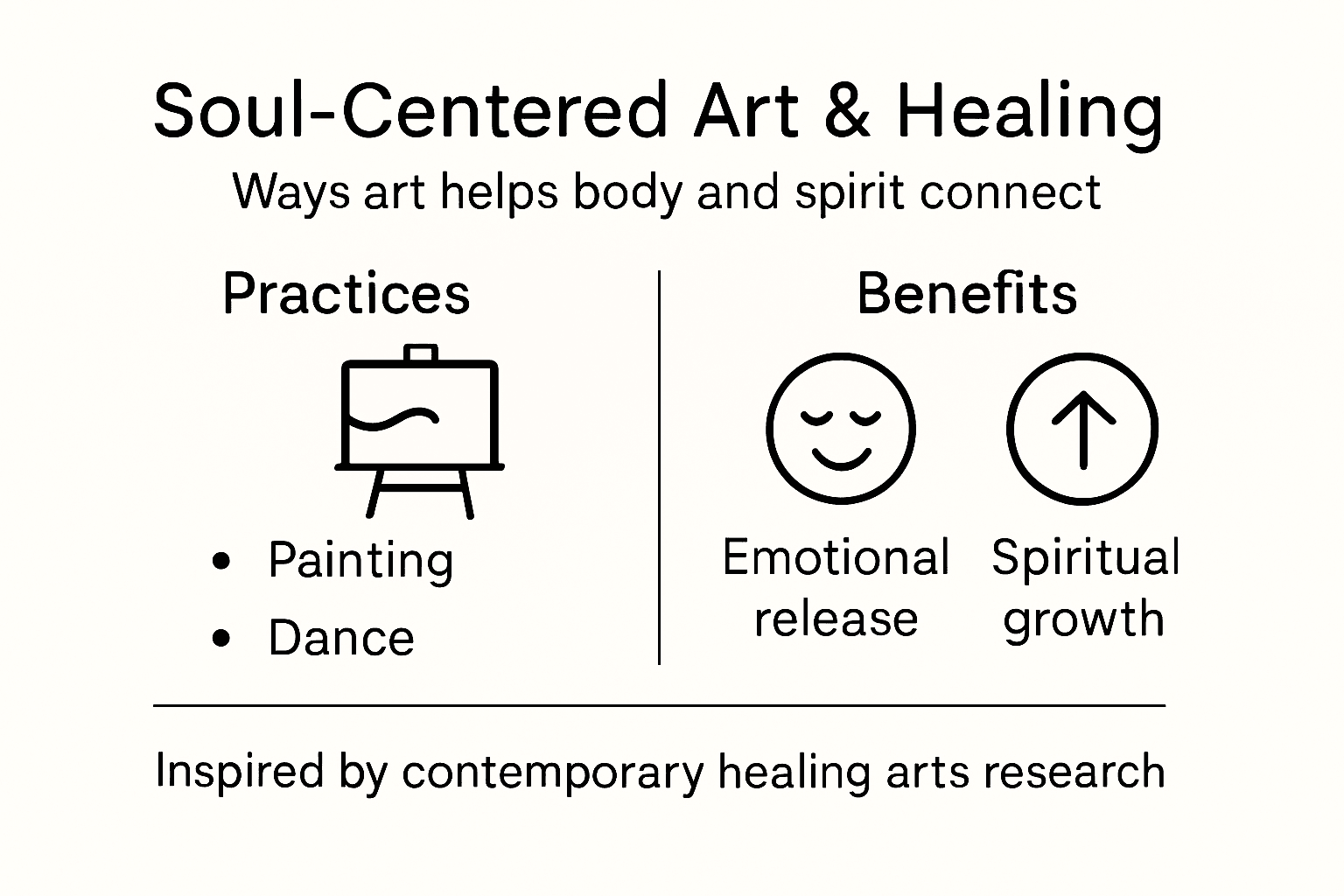
Below is a summary of key modalities common in soul-centered art and their unique contributions to spiritual healing:
| Modality | Example Practice | Contribution to Healing |
|---|---|---|
| Visual Arts | Painting, drawing the body | Invites self-acceptance and wholeness |
| Movement/Dance | Sacred ritual dance or gestures | Releases emotion, grounds spirit |
| Literary Arts | Journaling, poetry | Processes trauma and personal story |
| Sound/Music | Chanting, drumming | Vibrates energy, evokes emotion |
Pro tip: Choose one artistic medium that calls to you and commit to a consistent practice for at least four weeks—whether that’s painting twice weekly, creating a small ritual monthly, or moving mindfully each morning—allowing your body and spirit to develop trust in the process before expanding to other modalities.
How Soul-Centered Art Supports Healing
Healing through soul-centered art operates on multiple levels simultaneously. When you engage in creating or witnessing art that speaks to your spirit, something shifts internally. Your nervous system begins to regulate. Your emotions find permission to surface and be witnessed rather than suppressed. Your body, which may have learned to feel unsafe or disconnected, starts to remember its capacity for presence and aliveness. This isn’t mystical or vague—it’s grounded in how your brain responds to creative engagement. Engagement with creative arts activates neural circuits related to emotional regulation, particularly areas involved in processing difficult emotions and shifting your relationship to them. When you paint your grief, move your rage, or create rituals that honor your shame, your brain is literally rewiring its patterns. You’re teaching your nervous system that these emotions aren’t dangerous. You’re creating new neural pathways that support your capacity to feel, express, and integrate all of who you are.
The healing power of soul-centered art extends beyond the individual creator. Art functions as a form of communication when words fail. After trauma, after patriarchal wounding, after years of being told your body is wrong or your desires are shameful, language often breaks down. But your body knows how to move. Your hands know how to paint. Your voice knows how to sound. Soul-centered art gives these non-verbal ways of knowing permission to express what needs expression. This matters especially for marginalized and isolated populations—spiritual women navigating the particular loneliness of reclaiming your sexuality, your power, your embodied divinity in a culture that still punishes such reclamation. Both formal art therapy and informal creative engagement promote healing, emotional expression, empowerment, and post-traumatic growth, meaning you don’t need to wait for permission or professional spaces to begin your healing. Your own creative practice becomes therapeutic the moment you approach it with intention and presence.
What makes soul-centered art distinctly healing is its commitment to shadow integration rather than transcendence. Many spiritual paths encourage you to rise above difficult emotions, to transcend the body, to achieve states of enlightenment that leave the earthly, embodied, emotional self behind. Soul-centered art invites the opposite. It asks you to go deeper into your experience, not away from it. To honor the parts of yourself that are angry, that grieve, that long, that desire. To create art from those places rather than trying to spiritualize yourself out of them. When you stop resisting your shadow and instead integrate it through creative expression, something remarkable happens. The energy you’ve been using to suppress yourself becomes available for healing. The shame that’s been locked in your tissues begins to dissolve. Your capacity to feel pleasure, to inhabit your body fully, to claim your power expands naturally as you stop fragmenting yourself into acceptable and unacceptable parts.
The ritual dimension of soul-centered art amplifies its healing potential. Creating art with intention—whether that’s painting during your menstrual cycle to honor your creative power, moving your body to activate your Kundalini, or crafting altars that hold your healing intentions—transforms your practice into sacred ceremony. This ritual quality signals to your system that this time, this space, this expression matters. It’s protected. It’s honored. It’s not something you do in passing or when you have spare time. It’s something you show up for because your healing, your embodied wholeness, your reconnection with your sacred body and spirit depends on it. Over time, consistent engagement with soul-centered art rewires not just your individual nervous system but your relationship to yourself, to pleasure, to power, to the divine that lives in your flesh and blood and desire.
Pro tip: Create a dedicated space, even if it’s just a corner of a room, where you engage with your soul-centered art practice, and mark the beginning and end of each session with a small ritual—lighting a candle, speaking an intention, or taking three conscious breaths—to signal to your system that this time is sacred and protected.
Reclaiming the Sacred Feminine Through Art
The sacred feminine has been systematically suppressed, distorted, and weaponized against you for centuries. Religious narratives cast her as temptress or servant. Medical systems pathologized her bodily functions. Patriarchal culture demanded her smallness, her compliance, her self-erasure. Art becomes the space where you begin to reclaim what was taken, to restore what was hidden, to awaken what was forced to sleep. When you create art that celebrates the feminine body, that honors intuition as legitimate knowledge, that positions pleasure and desire as sacred expressions rather than shameful secrets, you’re doing something revolutionary. You’re rewriting the story. Reclaiming the sacred feminine involves restoring feminine archetypes and spiritual expressions suppressed by patriarchy, which means your art is simultaneously personal healing and cultural resistance. Every painting of the divine feminine is an act of rebellion. Every ritual that honors your sexuality is a reclamation. Every image of your body as sacred is a direct challenge to the narratives that tried to convince you otherwise.
What makes this reclamation through art so powerful is that it operates beyond intellectual understanding. You can know intellectually that your body is sacred and still carry shame in your tissues. You can believe conceptually in feminine power and still feel disconnected from your own. Art bypasses the rational mind and speaks directly to the nervous system, to the emotional body, to the places where conditioning has been stored. When you witness or create art that embraces joyful and rebellious expressions of femininity, something shifts at a cellular level. Your system begins to receive new information. The feminine isn’t dangerous. Your sexuality isn’t shameful. Your intuition isn’t irrational. Your emotional depth isn’t weakness. Your creativity isn’t frivolous. Your pleasure isn’t selfish. These truths move from concept into embodied knowing as you engage with art that reflects them back to you. Over time, this repetition of sacred feminine imagery rewires your nervous system’s response to your own body and being.
Reclaiming the sacred feminine through art also means reclaiming specific energies and qualities that patriarchy taught you to devalue. Intuition becomes recognized as a valid form of knowing, worthy of being centered in your creative practice and your life decisions. Cyclicity becomes celebrated rather than hidden—your menstrual cycle, your seasonal rhythms, your natural ebb and flow as sources of creative power rather than inconveniences to manage. Sensuality and sexuality become integrated aspects of your spiritual path rather than barriers to it. The erotic becomes recognized as life force, as Shakti, as divine creative energy moving through you. Emotional depth, receptivity, collaboration, and interconnection—qualities historically coded as feminine and therefore devalued—become honored as essential wisdom. When you create art that centers these energies, you’re not just healing yourself. You’re participating in a collective transformation, offering alternative images and possibilities to other women who are also hungry to remember what’s been stolen from them.
This reclamation is deeply embodied work. It’s not enough to think about the sacred feminine or to read about it philosophically. You must feel her moving through your body. You must express her through your hands, your voice, your movement, your sensuality. You must create spaces—altars, artwork, rituals—that hold her energy and invite others to access her too. The specificity of your own embodied experience matters. Your particular shade of skin, your specific body shape and size, your individual sexuality, your unique expression of feminine power—these are all sacred and worthy of artistic celebration. When you create or engage with art that honors your specific feminine embodiment rather than some abstract ideal, you’re completing a circle of reclamation. You’re saying: I am enough. My body is sacred. My sexuality is divine. My power is real. My expression matters. This is the revolution that begins in the body, spreads through art, and transforms culture.
Pro tip: Create a personal altar or dedicated space where you display images, objects, and artwork that celebrate the sacred feminine in all her forms—sensual, powerful, creative, cyclical—and spend time there regularly, allowing yourself to absorb and embody the energy these representations hold.
Risks, Challenges, and Misconceptions
Soul-centered art operates in a landscape crowded with misconceptions, both from skeptics who dismiss its value entirely and from enthusiasts who oversimplify its complexity. One persistent misconception is that creating or viewing art is a substitute for professional mental health support. While soul-centered art facilitates profound healing, it functions best alongside other modalities, not in place of them. If you’re managing severe trauma, active suicidality, or acute mental health crises, art alone cannot provide the clinical intervention you need. This isn’t a limitation of art but rather an acknowledgment of its specific domain. Art works with your psyche, your nervous system, your embodied experience. Therapy works with your thoughts, your behavioral patterns, your relational dynamics. Shadow work done through art might surface material that requires professional support to process safely. Another common misconception is that soul-centered art should always feel good, that the goal is to create beauty or achieve transcendent states. The reality is more nuanced. Art therapy encounters misconceptions about its efficacy and scientific grounding, which means you may encounter resistance when discussing your practice with people trained in conventional frameworks. Real soul-centered art sometimes feels uncomfortable. It brings up rage. It surfaces grief. It makes you confront parts of yourself you’ve been avoiding. This discomfort is often where the most important healing happens.
A significant challenge in contemporary spiritual spaces is the risk of appropriation and oversimplification. Sacred feminine energy, Kundalini awakening, tantric practice, goddess consciousness—these carry deep cultural and spiritual significance. When they’re extracted from their contexts and repackaged as trendy wellness concepts, something essential gets lost. You might encounter art or teachings that use sacred feminine language without understanding its roots, that invoke Kundalini without respect for its tradition, that commodify goddess consciousness into another product to consume. The challenge is discerning between authentic engagement with these practices and diluted, commercialized versions. This requires developing your own critical awareness, connecting with actual practitioners or teachers from these traditions, and staying honest about what you truly understand versus what you’re still learning. Additionally, the scientific study of spirituality encounters misconceptions and ambiguity due to subjectivity and cultural variability, which means discussions about soul-centered art’s legitimacy can quickly become defensive. You may find yourself justifying your practice to people who prioritize quantifiable outcomes, standardized measures, and measurable results. Soul-centered art’s value often lies in areas that don’t fit neatly into conventional research frameworks. Your transformation might be visible only to you. Your healing might show up as subtle shifts in how you inhabit your body, not as data points.
Another risk worth acknowledging is the potential for spiritual bypassing through soul-centered art. It’s possible to create beautiful, emotionally resonant work while simultaneously avoiding genuine integration of what it reveals. You might paint your anger without ever expressing it, draw your sexuality without ever claiming it, create rituals that feel profound while your actual life remains unchanged. The risk intensifies when soul-centered art becomes another way to stay comfortable, to feel like you’re doing the work without actually doing the hard embodied labor of transformation. Authentic practice requires following your art into action. If you create art that honors your sexuality, that work asks you to embody more sexuality in your actual life. If you paint your power, you’re being invited to claim it more fully in your relationships and choices. If you create rituals around reclamation, the art is only the beginning. The real work happens when you return to your daily life and actually reclaim.
There’s also the challenge of navigating cultural and religious backgrounds that actively pathologize the sacred feminine, sexuality, and embodied spirituality. If you were raised in environments that taught you the body is sinful, that feminine sexuality is dangerous, that pleasure is shameful, soul-centered art can trigger deep survival responses. Your nervous system might fight against the very images and practices you’re trying to integrate. This isn’t a sign your practice is wrong. It’s a sign that you’re working with real conditioning, real trauma, real protective mechanisms that developed for important reasons. Moving slowly matters. Building safety matters. Getting support matters. You don’t have to purge all your conditioning overnight, and your practice doesn’t have to look like anyone else’s.
Pro tip: Before diving deep into soul-centered art practices, assess your current mental health support system and identify whether you need additional resources like therapy or body-based healing work, then design your practice as a complement to these foundations rather than a replacement for them.
Embrace Healing Through Soul-Centered Art and Reclaim Your Sacred Body
The article highlights the profound challenge many women face in reclaiming their bodies and spirits after years of societal shame and disconnection. If you are longing to transform your relationship with your body, sexuality, and inner truth using art that honors shadow integration and divine feminine energy, you are not alone. Soul-centered art offers a powerful path to self-awareness and embodied healing that goes beyond traditional creativity.

Experience original paintings and ritual-based art designed as living portals to reconnect you with your life force and the sacredness of your feminine power. Each piece from Art By Shakt invites you to move beyond shame and fragmentation into a space where sensuality, spirituality, and transformation unite. Now is the time to ground your journey through artwork that supports your nervous system, awakens your Kundalini energy, and honors your unique embodiment.
Discover how you can claim your power and participate in a collective healing by exploring original paintings and commissioned works. Start your sacred reclamation today and step fully into your authentic self.
Frequently Asked Questions
What is soul-centered art?
Soul-centered art is a type of artistic expression that channels one’s inner truth, consciousness, and spiritual essence into visual form. It focuses on healing, self-awareness, and spiritual awakening rather than just the aesthetic or technical aspects of traditional art.
How does soul-centered art support healing?
Soul-centered art promotes healing by engaging the creator and observer in a transformative process. It helps to regulate emotions, integrate difficult feelings, and fosters a deeper connection with one’s body and spirit, often through non-verbal expressions that articulate feelings that can be hard to express in words.
What types of practices are included in soul-centered art?
Soul-centered art encompasses various modalities including visual arts, movement and dance, literary expression, and sound. It focuses on the authentic expression of one’s inner experience and can take many forms, from painting and writing to dance and ritual.
Can anyone practice soul-centered art, or do you need specific skills?
Anyone can practice soul-centered art, regardless of their creative background or skill level. The practice centers on authenticity and the willingness to express one’s truth rather than technical skill or mastery of a medium.