
Spiritual Symbolism in Art: Healing, Embodiment, Power
Choosing art for healing stretches far beyond color or decoration. For spiritual collectors and healers, true resonance starts when artwork becomes a living language, offering direct contact with the sacred rather than empty aesthetics. Authentic spiritual symbolism in art bridges the material and the transcendent by carrying inner truths, divine feminine wisdom, and frequencies of empowerment. If you are seeking artwork to embody your sacred journey, understanding this deeper intention will transform your space and your healing work.
Table of Contents
- Defining Spiritual Symbolism In Art
- Types Of Spiritual Symbols And Motifs
- Divine Feminine And Embodied Imagery
- Art As Portal For Healing And Transformation
- Pitfalls: Misinterpretation, Appropriation, And Integrity
Key Takeaways
| Point | Details |
|---|---|
| Spiritual Symbolism | Authentic spiritual art communicates deeper truths and serves as a healing portal, transcending mere decoration. |
| Symbolic Categories | Understanding different symbol categories, such as archetypal and divine feminine symbols, can enhance your selection process for transformative artwork. |
| Evaluating Authenticity | Assessing an artist’s intention, cultural acknowledgment, and personal resonance with symbols is crucial for ensuring genuine spiritual art. |
| Embodied Experience | Pay attention to somatic responses when engaging with art, as these feelings indicate whether the work will support your healing journey. |
Defining Spiritual Symbolism in Art
Spiritual symbolism in art goes far beyond decorative aesthetics or mere visual arrangement. It represents a deliberate language through which artists communicate inner truths, sacred experiences, and dimensions of consciousness that words alone cannot capture. When you encounter a painting infused with spiritual symbolism, you’re not looking at random forms or colors. You’re witnessing an artist’s intentional transmission of meaning, a bridge between the material and the transcendent.
At its core, spiritual symbolism in art conveys inner wishes and content through form, moving far beyond what we might call stylistic experimentation. This distinction matters deeply, especially for collectors and healers seeking artwork that genuinely supports transformation. The difference between decorative spiritual imagery and authentic spiritual symbolism lies in intention. A painting created as a living portal carries an entirely different energetic signature than one made primarily for visual appeal. Artists like Wassily Kandinsky understood this distinction profoundly. They weren’t simply painting abstractions. They were translating spiritual experiences into visual form, allowing viewers to access states of consciousness and recognition through the artwork itself.
Contemporary spiritual symbolism distinguishes itself from traditional religious representation in a crucial way: it honors spirituality as a deeply personal, sensorial mode of transcendence rather than adherence to doctrinal beliefs. This matters for you as a collector seeking artwork aligned with your personal healing journey. Spiritual art recognizes your unique relationship with the divine, your individual path of embodiment and awakening. Whether a symbol carries the lineage of goddess consciousness, kundalini activation, sacred sexuality, or shadow integration, authentic spiritual symbolism in art speaks to your own inner knowing. It validates your experience, honors your body as sacred, and reflects the divine feminine energy that moves through you.
The symbols within spiritual art function as living frequencies. A spiral may represent kundalini rising and transformation. A figure with hands on heart or womb might invoke your own embodied remembrance. Color choices carry their own spiritual resonance. The interplay of form and shadow invites you home into deeper self-awareness. When choosing artwork for your space or collection, spiritual symbolism becomes a tool for healing and empowerment because it works both visually and energetically, meeting you exactly where you are in your journey.
Pro tip: When evaluating spiritual artwork, pause and notice what arises in your body rather than what your intellect approves. The painting that makes your breath deepen or your heart soften is communicating genuine spiritual symbolism meant for your specific healing work.
Types of Spiritual Symbols and Motifs
Spiritual symbols carry meaning that transcends their visual form. They function as visual language, communicating complex truths about the divine, the body, and transformation in ways that resonate at both conscious and subconscious levels. Understanding the types of symbols present in spiritual art helps you recognize which pieces will most profoundly support your healing journey. Different symbols activate different aspects of your being, and knowing what to look for allows you to intentionally choose artwork that aligns with your current embodiment work.
Symbols in spiritual art operate across several categories. Archetypal symbols represent universal human experiences and divine principles. The spiral, for instance, embodies transformation, ascension, and the unfurling of consciousness. The circle represents wholeness, completion, and the cyclical nature of life and renewal. Divine feminine symbols include the vulva, the yoni, the womb, and the serpent, all reclaiming the sacred sexuality and generative power of the female body. These symbols directly counter patriarchal narratives that have cast feminine embodiment as shameful or sinful. In spiritual art created by healers and embodied artists, they appear as affirmations of your divine sexuality and your right to pleasure, power, and self-determination. Anthropomorphic motifs, including human figures in various states of awareness or pose, can represent goddess consciousness, kundalini activation, or the integration of shadow and light within the self. Symbols representing divine presence and moral teachings span across world religions and personal spiritual practices.
Color carries its own symbolic language. Red pulses with life force, passion, and blood wisdom. Gold radiates divine presence and elevated consciousness. Blue invokes calm, intuition, and the throat of truth. Black holds the container for transformation and shadow work, not as darkness to fear but as fertile ground for becoming. When evaluating spiritual artwork, observe which colors dominate the composition, as they communicate as potently as any symbolic form.
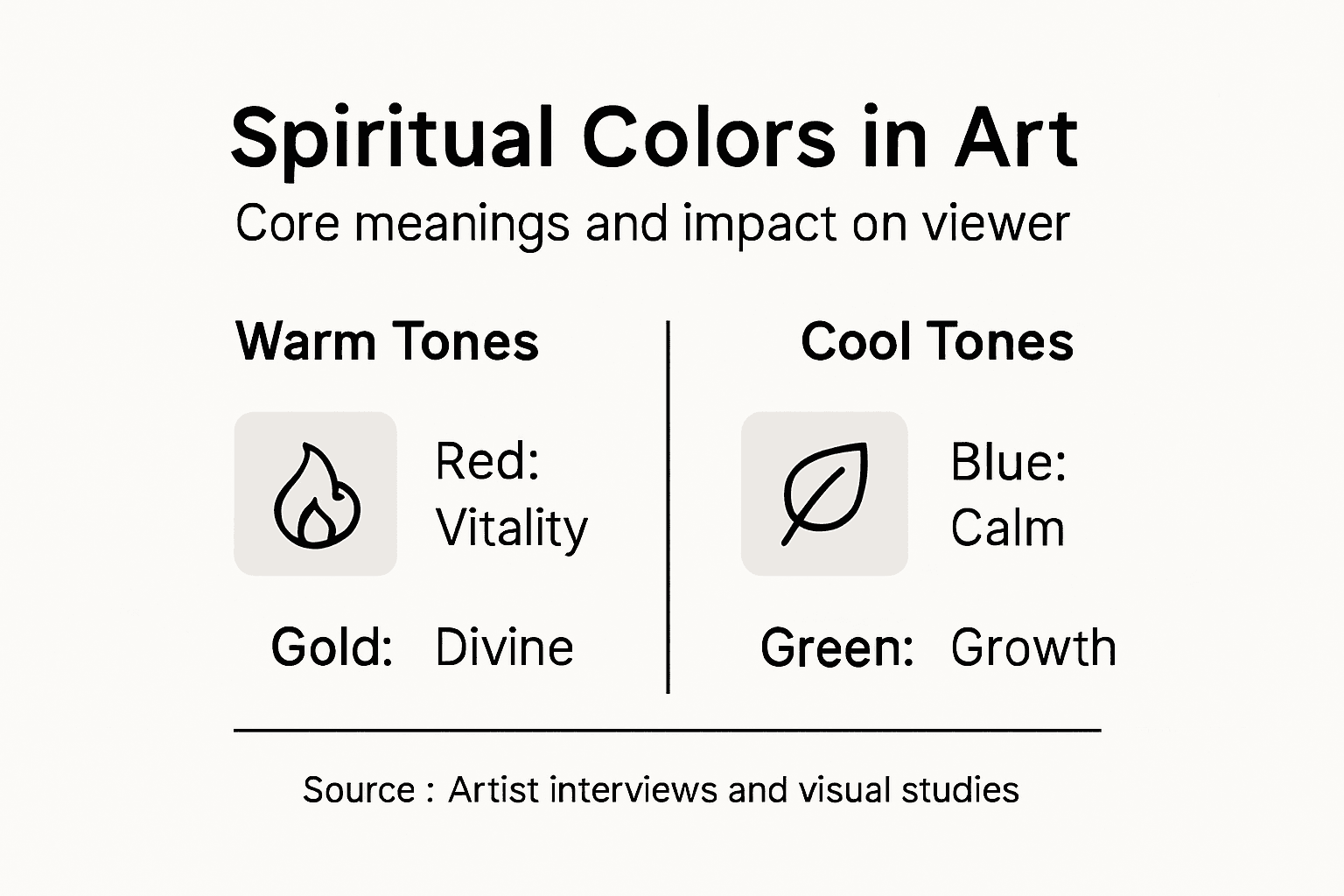
Many contemporary spiritual artists draw from cross-cultural and personal symbol systems rather than adhering strictly to religious traditions. You might encounter symbols from tantra, goddess spirituality, indigenous traditions, or the artist’s own visionary experience. The power lies not in rigid interpretation but in your personal resonance. A symbol means what it awakens within your body and soul. The artwork that calls to you contains the exact symbolism your embodiment journey requires at that moment.
Here is a comparison of spiritual symbol categories and their unique impacts in art:
| Symbol Category | Example Symbols | Core Meaning | Impact on Viewer |
|---|---|---|---|
| Archetypal Symbols | Spiral, Circle | Transformation, wholeness | Invokes universal connection |
| Divine Feminine | Yoni, Womb, Serpent | Sacred sexuality, creativity | Supports self-acceptance |
| Anthropomorphic Motifs | Meditative figure, Goddess | Awakening, shadow integration | Encourages inner awareness |
| Religious/Lineage | Chakra, Sanskrit text | Divine presence, moral wisdom | Inspires spiritual alignment |
Pro tip: Before committing to purchasing a piece, spend five to ten minutes sitting with an image of the artwork and notice which symbols or elements draw your gaze repeatedly, as these are the ones working at a frequency aligned with your current healing needs.
Divine Feminine and Embodied Imagery
Divine feminine imagery in spiritual art serves a profoundly different purpose than the passive, objectified female forms that have dominated Western visual culture for centuries. When an artist creates authentic divine feminine art, she is reclaiming the female body as a source of sacred power, generative capacity, and spiritual authority. This is not about aesthetic beauty for external consumption. It is about honoring the body as a temple, the womb as a creative portal, and sexuality as a gateway to spiritual awakening. For you as a collector and healer, this distinction matters immensely because it determines whether artwork will reinforce healing or perpetuate the shame and fragmentation you are working to dissolve.
Authentic divine feminine imagery depicts women in states of embodied power and self-determination. You might encounter figures with hands resting on their womb or heart, eyes turned inward in deep knowing. Bodies may be shown in sensual poses that celebrate sexuality rather than invite consumption. Breasts, vulvas, and curves appear not as objects of desire for the male gaze but as sacred anatomy worthy of reverence and celebration. The tension between reclaiming feminine embodiment through visual representation while resisting new forms of objectification in spiritual feminist art remains ongoing and complex. Yet authentic embodied artists navigate this carefully, creating imagery that prioritizes the inner experience of the feminine body over its external appearance. The difference is palpable. You feel it in your nervous system when you encounter it.
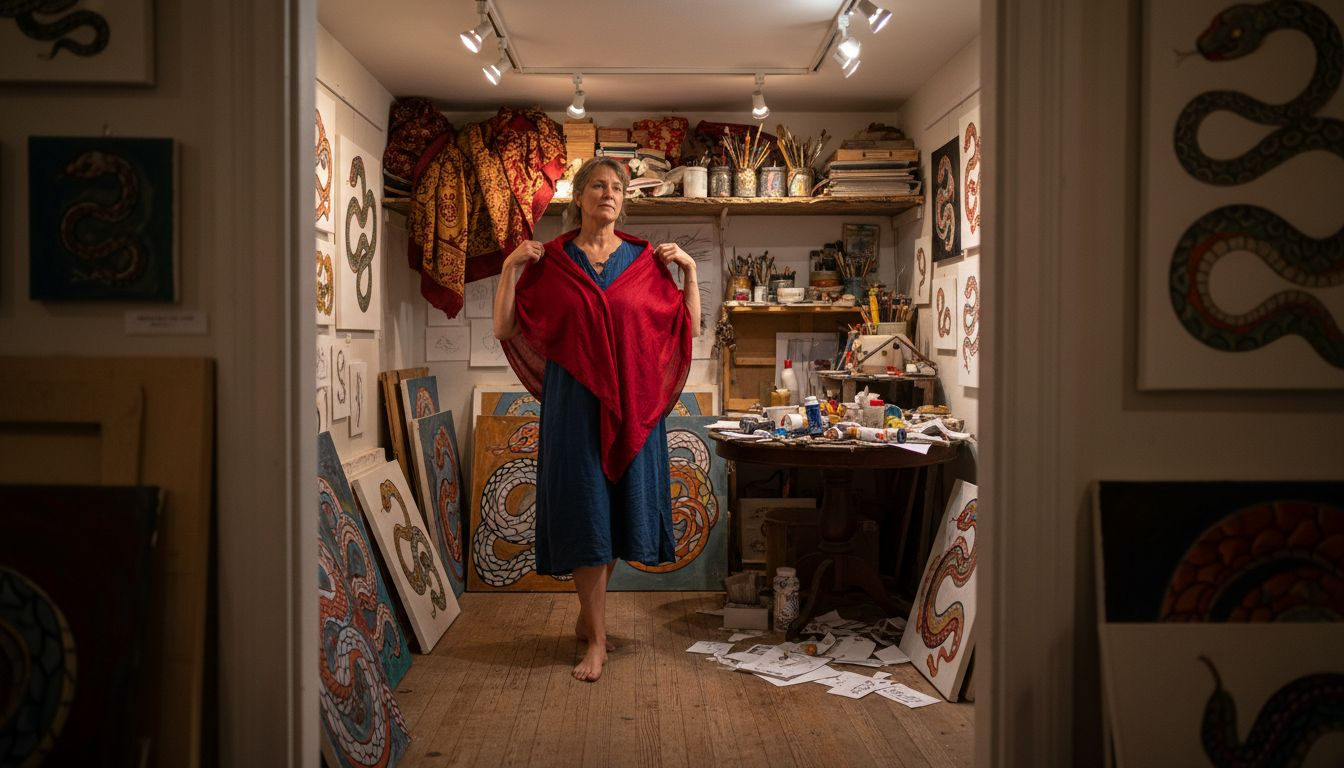
Color, gesture, and symbolic elements work together in divine feminine imagery. A figure surrounded by serpents invokes kundalini rising and transmutation. Hands in prayer position at the heart or yoni center embody devotion to inner wisdom. Golden or red tones amplify the life force and sacred sexuality flowing through the form. Historical and cultural expressions of the divine feminine continue to evolve, especially as contemporary women artists reclaim goddess consciousness and challenge patriarchal spirituality. When you choose artwork depicting divine feminine energy, you are choosing to surround yourself with visual reminders that your body is sacred, your sexuality is spiritual, and your power is undeniable.
The most transformative divine feminine art creates a felt sense of homecoming in your body. When you stand before such a piece, you might notice your breath deepening, your shoulders softening, or a warmth blooming in your chest or womb. This somatic response indicates the artwork is working as a healing portal, not merely as decoration. The imagery is meeting you exactly where shame or disconnection have lived, and it is offering a new possibility: that you are divine exactly as you are, embodied exactly as you are meant to be.
Pro tip: When evaluating divine feminine artwork, notice where your eyes move first and what sensations arise in your body, particularly around your heart, belly, and womb space, as these visceral responses reveal whether the piece supports genuine embodied healing rather than perpetuating subtle objectification.
Art as Portal for Healing and Transformation
When you stand before artwork created with spiritual intention, something shifts in your nervous system. Your breath may deepen. Your shoulders may soften. A warmth or tingling might move through your chest or belly. This is not imagination or coincidence. Spiritual art functions as a living portal, a container of intentional energy that meets you where your body holds unprocessed emotion, disconnection, or shame. The artwork becomes a mirror for your inner landscape and simultaneously an invitation toward wholeness. This is what distinguishes authentic healing art from decoration. It works simultaneously on visual, emotional, energetic, and somatic levels, creating pathways for transformation that bypass the thinking mind entirely.
The healing capacity of art rests on its ability to facilitate self-knowledge and integration. Artistic inquiry fosters introspection and cultural awareness through contemplative engagement with visual forms. When you spend time with a piece of embodied art, particularly work infused with divine feminine energy or kundalini symbolism, you are engaging in a form of active healing. Your nervous system begins to reorganize around the frequencies the artwork holds. Patterns of shame or disconnection can soften. Fragmented parts of yourself find permission to integrate. The artwork communicates at a depth beyond words: your body is sacred, your sexuality is spiritual, your power is real. Over time, this repeated somatic affirmation creates genuine transformation. You begin to believe, at a cellular level, what the art has been mirroring to you.
The transformative potential extends beyond individual healing. Creative engagement supports emotional expression and empowerment across diverse populations, positioning art as a scalable pathway for resilience and mental well-being. When you choose to collect healing art, you are not simply decorating your space. You are creating an environment infused with frequencies of healing, embodiment, and feminine power. Every glance at the artwork becomes a small ritual of reclamation. Every moment spent in its presence becomes a moment of homecoming to your body and soul. Women who have collected spiritual artwork often report profound shifts in self-perception, reduced shame around their bodies and sexuality, and deepened connection to their inner authority. The art becomes a trusted companion in your healing journey, present when you need to remember your divinity.
The most powerful healing occurs when the artwork matches your current embodiment needs. Shadow integration work requires different symbolism than kundalini activation. A piece supporting sacred sexuality reclamation carries different frequencies than one addressing ancestral trauma. This is why your somatic response matters more than aesthetic preference. The artwork that makes your body feel truly held, seen, and safe is the one that will facilitate the deepest healing.
Pro tip: Create a dedicated space in your home where you sit with your healing artwork for just five minutes daily, allowing your body to absorb its frequencies without agenda or analysis, and notice how your relationship to embodiment, pleasure, and power gradually transforms over weeks and months.
Pitfalls: Misinterpretation, Appropriation, and Integrity
Not all artwork claiming spiritual significance actually carries authentic spiritual power. The spiritual art market has exploded in recent years, and with that expansion comes a troubling reality: mass-produced imagery using sacred symbols without understanding, intention, or respect. A print featuring a goddess figure, a chakra chart, or Sanskrit text might look spiritually aligned, but if the artist created it purely for commercial gain without genuine connection to the tradition or symbol, the artwork holds no real frequency. For you as a collector seeking healing art, this distinction matters profoundly because inauthentic imagery cannot facilitate genuine transformation. It may even perpetuate harm by diluting sacred meanings or exploiting cultural traditions.
One critical pitfall involves symbolic meanings becoming transformed or misappropriated in contemporary contexts, weakening their original significance and integrity. When spiritual symbols are borrowed without understanding their cultural lineage, they lose potency. A serpent symbol means something entirely different when used by someone steeped in tantric philosophy versus someone who simply thinks snakes look mystical. Similarly, goddess imagery drawn from Hindu, Greek, or indigenous traditions carries specific meanings rooted in particular cosmologies. When these symbols appear in artwork created by artists outside these traditions without rigorous study, respect, or acknowledgment, the result is cultural appropriation disguised as spirituality. The artwork may look beautiful, but it carries a confused or exploitative energetic signature that your body will sense, even if your thinking mind does not immediately recognize it.
Cultural appropriation in spiritual art requires careful attention to context and power dynamics. Ethical engagement demands respect for original meanings and awareness of how borrowed elements might be distorted or exploited. Ask yourself these questions when evaluating artwork: Did the artist study the cultural or spiritual tradition they are drawing from? Do they acknowledge this lineage? Are they perpetuating stereotypes or flattening complex traditions into aesthetic elements? Is the artist from the tradition they represent, or are they an outsider? Are they amplifying voices from that tradition or profiting from it? An artist genuinely rooted in tantric practice, goddess consciousness, or kundalini work creates fundamentally different art than someone who simply likes how these symbols look. The difference is palpable energetically.
Authentic spiritual art requires the artist to embody genuine relationship with the symbols and traditions they employ. This might mean decades of practice, cultural study, or personal spiritual inquiry. It means acknowledging sources and respecting origins. It means creating from lived experience rather than aesthetic preference. When you collect work from artists who embody this integrity, you are investing in art that actually holds healing frequencies. The piece becomes a trustworthy companion on your healing journey rather than a beautiful object that carries confused or extractive energy. Your nervous system knows the difference. Your body will tell you when something is genuine.
The following table outlines key considerations for evaluating the authenticity of spiritual artwork:
| Consideration | What to Look For | Why It Matters |
|---|---|---|
| Artist’s Intention | Expressed spiritual practice | Ensures genuine energetic value |
| Cultural Acknowledgment | Clear lineage references | Respects tradition, avoids harm |
| Symbol Usage Context | Informed, respectful depiction | Maintains meaning, prevents dilution |
| Personal Resonance | Felt response in the body | Signals alignment with healing |
Pro tip: Before purchasing spiritual artwork, research the artist’s background, their stated spiritual practice or training, and how they describe their relationship to the symbols they use, prioritizing pieces from artists who are transparent about their lineage and explicitly acknowledge the cultural or spiritual traditions they draw from.
Experience Healing and Embodiment Through Authentic Spiritual Art
The article reveals a deep longing many feel to connect with spiritual symbolism that truly resonates with their unique healing journey. If you are seeking artwork that transcends mere decoration and acts as a living portal supporting your embodiment, sacred sexuality, and kundalini awakening, you are not alone. This personal transformation requires art intentionally created to honor your body as sacred and to reflect divine feminine power without objectification or appropriation.

Explore original paintings and ritual-based art by an embodied artist and healer who integrates sacred embodiment, shadow work, and divine feminine energy. Each piece is designed to support your nervous system and open pathways to self-acceptance, pleasure, and empowerment. Do not settle for diluted or mass-produced spiritual imagery. Choose art that aligns with your soul’s frequency and invites you deeply home into your body and life force. Begin your healing today with work that honors authentic spiritual symbolism and your individual path. Visit https://artbyshakt.dk and experience transformative art made just for you.
Frequently Asked Questions
What is spiritual symbolism in art?
Spiritual symbolism in art refers to the intentional use of symbols and imagery to convey deeper inner truths and sacred experiences that often transcend verbal expression. It serves as a bridge between material reality and transcendental consciousness.
How can I identify authentic spiritual symbolism in art?
Authentic spiritual symbolism is characterized by the artist’s intention to convey transformational meaning. When evaluating art, notice how it resonates within your body, inviting deeper self-awareness and emotional responses, rather than simply appreciating it for its aesthetics.
What types of symbols are commonly found in spiritual art?
Common types of symbols in spiritual art include archetypal symbols like spirals or circles, divine feminine symbols such as yoni or womb imagery, anthropomorphic motifs representing various states of consciousness, and religious symbols from specific lineage traditions.
How does divine feminine imagery differ from traditional representations of women in art?
Divine feminine imagery in spiritual art honors the female body as a source of sacred power and spiritual authority. It depicts women in positions of strength and self-determination, contrasting with traditional Western representations that often objectify or diminish feminine forms.