
Why Collect Spiritual Art: Transforming Spaces and Souls
Bold ideas about consciousness are transforming how people view spiritual art. For many women and men tuning into personal growth and sacred embodiment, these creations offer more than decoration. Over 40 percent of American adults are turning to spiritual and healing practices that blend art with intuitive wisdom. This guide explores the transformative purpose and impact of spiritual art, giving you insight on how it deepens healing and supports soulful empowerment.
Table of Contents
- Defining Spiritual Art And Its Purpose
- Major Types Of Spiritual And Ritual Art
- How Spiritual Art Supports Healing And Growth
- Transformative Impact On Embodiment And Self-Connection
- Risks And Common Mistakes To Avoid
Key Takeaways
| Point | Details |
|---|---|
| Spiritual Art as Exploration | Spiritual art serves as a medium for exploring consciousness and offers pathways to existential insights beyond traditional aesthetics. |
| Healing and Transformation | Engagement with spiritual artwork fosters emotional integration and connects individuals to deeper layers of consciousness, facilitating healing journeys. |
| Cultural Respect and Intentional Engagement | Collectors should approach spiritual art with deep respect and understanding of its cultural origins to avoid superficiality and cultural appropriation. |
| Invite Intuitive Response | When selecting spiritual art, trust your intuitive reaction to create a genuine energetic resonance that fosters personal transformation. |
Defining Spiritual Art and Its Purpose
Spiritual art transcends traditional aesthetic boundaries, emerging as a profound medium for exploring consciousness, transformation, and sacred connection. Unlike conventional artistic expressions, spiritual art serves as an energetic portal that invites viewers into deeper realms of perception and inner understanding. Contemporary spiritual art perspectives reveal it as a transformative practice that moves beyond organized religious frameworks, offering viewers pathways to existential insight and universal belonging.
At its core, spiritual art functions as a communication system that translates intangible experiences into visual language. Artists engaged in this practice are not merely creating aesthetic objects but generating sacred technologies of perception that help viewers access expanded states of awareness. Artistic understanding models demonstrate how such artworks communicate profound spiritual insights that transcend rational or scientific comprehension, inviting emotional and intuitive engagement.
The purpose of spiritual art extends far beyond decorative intention. It serves multiple interconnected functions: healing, awakening, remembering, and reconnecting. These artworks act as energetic mirrors, reflecting inner landscapes and challenging viewers to explore their own consciousness. Whether through abstract representations, symbolic imagery, or embodied forms, spiritual art creates liminal spaces where personal transformation becomes possible - spaces where souls can expand, heal, and reimagine themselves.
Pro Tip: When selecting spiritual art, trust your intuitive response and choose pieces that create an immediate energetic resonance or emotional activation within your personal space.
Major Types of Spiritual and Ritual Art
Spiritual and ritual art encompasses a rich and diverse landscape of creative expressions that transcend traditional artistic boundaries. Diverse spiritual art forms include profound manifestations such as mandalas, ritual masks, sacred iconography, architectural designs, and performative practices that serve as powerful conduits for cultural and spiritual communication. These art forms are not merely aesthetic objects but complex systems of meaning-making that connect individuals to deeper collective experiences.
Across global cultures, spiritual art manifests through multiple modalities, each carrying unique significance. Spiritual art types range from visual arts and digital media to music, literature, and performance arts. These expressions function as sacred technologies that facilitate ritual practices, embody spiritual narratives, and create immersive experiences of transformation. Whether through intricate mandalas representing cosmic order, ritualistic masks communicating ancestral wisdom, or sacred architectural spaces designed to evoke transcendence, each art form serves as a profound vehicle for spiritual exploration and collective memory.
The contemporary landscape of spiritual art continues to evolve, integrating traditional practices with modern creative technologies. While rooted in ancient traditions, these art forms now incorporate digital media, multimedia installations, and interdisciplinary approaches that challenge conventional boundaries. The underlying purpose remains consistent: to create portals of connection, healing, and expanded consciousness that invite viewers and participants into deeper states of understanding and spiritual engagement.
Pro Tip: When exploring spiritual art, approach each piece as an energetic invitation - allow yourself to feel its resonance beyond visual aesthetics, sensing the deeper spiritual communication embedded within the artwork.
Here’s a concise guide comparing major types of spiritual art and their distinctive features:
| Art Form | Main Purpose | Typical Medium | Cultural Origin |
|---|---|---|---|
| Mandalas | Represent cosmic order | Sand, paint, digital | Himalayan, Asian traditions |
| Ritual Masks | Channel ancestral wisdom | Wood, clay, fibers | African, Indigenous tribes |
| Sacred Iconography | Convey spiritual narratives | Paintings, mosaics | Christian, Hindu, Buddhist |
| Architectural Spaces | Evoke transcendence | Stone, glass, mixed | Global sacred sites |
| Performative Arts | Facilitate ritual practice | Dance, music, theater | Multiple world cultures |
How Spiritual Art Supports Healing and Growth
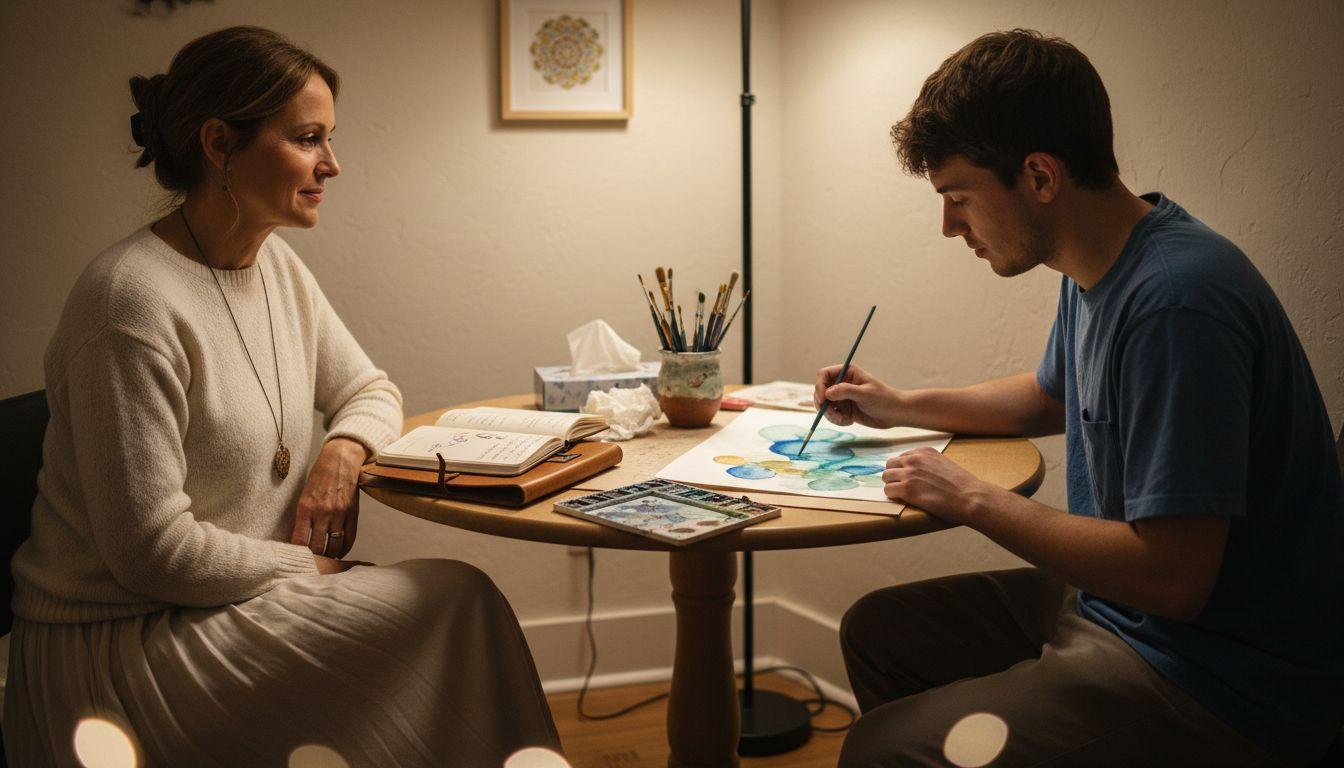
Arts-based spiritual healthcare reveals profound pathways for emotional and spiritual healing through creative expression. Spiritual art serves as a powerful transformative tool that goes beyond aesthetic appreciation, functioning as a dynamic process of self-exploration and inner restoration. By engaging with spiritual artwork, individuals can access deeper layers of consciousness, process complex emotions, and initiate profound healing journeys that reconnect them with their authentic inner landscape.
The therapeutic dimensions of spiritual art emerge through multiple interconnected mechanisms. Art therapy and spirituality demonstrate how creative practices facilitate emotional integration, providing safe spaces for expressing unspoken experiences and transforming psychological wounds. These artistic encounters create energetic portals that enable individuals to externalize internal experiences, symbolically represent their spiritual challenges, and develop more compassionate relationships with their personal narratives of growth and healing.
Spiritual art’s healing potential extends beyond individual transformation, touching collective consciousness and intergenerational healing. By representing archetypal experiences, sacred symbolism, and embodied wisdom, these artworks serve as bridges between personal experience and universal spiritual truths. They invite viewers into expanded states of awareness, challenging limited perceptions and offering alternative frameworks for understanding suffering, resilience, and spiritual evolution. Through visual metaphors and energetic resonance, spiritual art becomes a catalyst for profound psychological and spiritual metamorphosis.
Pro Tip: Create a personal ritual of contemplation when encountering spiritual artwork - pause, breathe deeply, and allow the artwork’s energy to communicate beyond its visual elements.
The table below summarizes the key ways spiritual art supports personal and collective healing:
| Healing Dimension | How Spiritual Art Contributes | Example Effect |
|---|---|---|
| Emotional Integration | Expresses and transforms deep feelings | Release of grief or stress |
| Self-Exploration | Reveals inner truths and narratives | Greater self-awareness |
| Collective Healing | Connects to shared archetypes and stories | Sense of belonging |
| Spiritual Growth | Invokes transcendent experiences | Heightened consciousness |
Transformative Impact on Embodiment and Self-Connection
Arts-based spiritual healthcare reveals that spiritual art serves as a profound catalyst for deepening embodiment and reconnecting with one’s authentic self. By engaging with artwork that resonates at a soul level, individuals can transcend intellectual understanding and enter direct, visceral experiences of self-discovery. These creative encounters create powerful portals for exploring inner landscapes, allowing hidden aspects of personal experience to emerge and be witnessed with compassionate awareness.
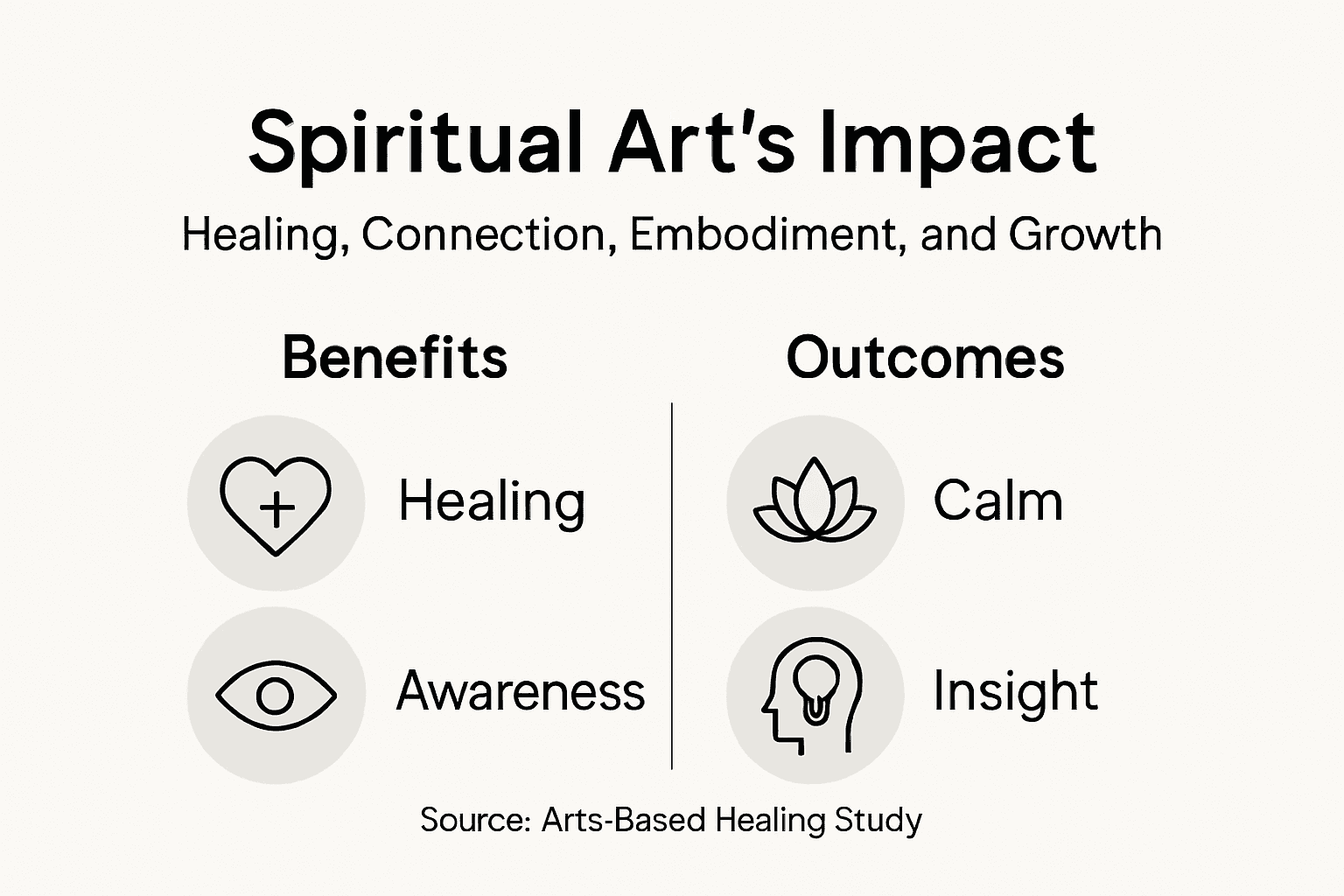
Spiritual art experiences generate immersive moments of present-moment awareness that dissolve the boundaries between observer and artwork. Through intimate engagement, individuals encounter a deeper sense of belonging that transcends material existence, catalyzing transformative self-understanding. These artistic encounters invite practitioners into expanded states of consciousness where emotional, spiritual, and physical dimensions merge, creating holistic experiences of integration and healing.
The transformative power of spiritual art lies in its ability to bypass rational defenses and speak directly to the body’s wisdom. By representing archetypal experiences and sacred symbolism, these artworks create energetic resonances that can unlock stored emotional patterns, facilitate shadow integration, and support individuals in reclaiming fragmented aspects of their inner world. This process of embodied self-connection becomes a radical act of healing, challenging dominant narratives and inviting a more compassionate relationship with one’s entire lived experience.
Pro Tip: Create a personal altar with spiritual artworks that speak to your current healing journey, allowing these pieces to serve as daily reminders of your inner transformation and sacred potential.
Risks and Common Mistakes to Avoid
Spiritual art practices demand profound respect and intentional engagement to avoid critical pitfalls that can dilute their transformative potential. One fundamental risk emerges from superficial or tokenistic approaches that treat spiritual art as mere aesthetic decoration rather than a sacred form of communication and healing. Collectors and enthusiasts must recognize that these artworks are living energetic portals, not commodities to be consumed without deeper understanding or reverence.
Cultural appropriation represents a significant danger in spiritual art collection. Many spiritual artistic traditions emerge from Indigenous, Eastern, and marginalized communities with deep, complex symbolic languages. Collecting such artwork requires extensive research, understanding of context, and a genuine commitment to honoring the original cultural narratives. Naive or extractive approaches that remove sacred symbols from their authentic contexts can perpetuate harmful colonial dynamics and diminish the artwork’s intrinsic spiritual power.
Another critical mistake involves projecting personal expectations or limiting interpretations onto spiritual artwork. These pieces are designed to invite personal transformation, not conform to preconceived narratives or provide simplistic emotional gratification. True engagement requires surrendering intellectual control, allowing the artwork’s energy to communicate beyond rational understanding. Spiritual art challenges viewers to expand consciousness, confront internal resistance, and embrace nuanced, sometimes uncomfortable spiritual insights that cannot be reduced to linear explanations.
Pro Tip: Before purchasing spiritual artwork, spend time in deep contemplation with the piece, sensing its energetic resonance and checking whether it genuinely activates your inner healing processes.
Elevate Your Space and Soul with Spiritual Art That Heals and Transforms
The article “Why Collect Spiritual Art: Transforming Spaces and Souls” highlights the deep need for art that goes beyond decoration to become a living energetic portal for healing, embodiment, and self-connection. Many people struggle with superficial art that does not resonate with their inner truth or support their spiritual growth. If you long for artwork that activates your life force, reconnects you with your body, and challenges limiting cultural narratives, then spiritual art must be more than an object to you. It should serve as a sacred technology to awaken your Kundalini energy, integrate shadow aspects, and embrace divine feminine power.

Discover how Shakti’s original paintings and ritual-based art can become that transformative force in your home or sacred space. Each piece is crafted to create energetic support for grounding, healing, and awakening your authentic self. Whether you seek commissioned works or prints, these artworks bridge spirituality, sensuality, and radical embodiment, offering a powerful alternative to mainstream spiritual art. Step into your sacred journey today with Shakti’s spiritual art collection and feel the difference authentic, soul-aligned art can make. Embrace healing and transformation now by visiting artbyshakt.dk and choosing your own living portal.
Frequently Asked Questions
What is spiritual art and how does it differ from traditional art?
Spiritual art transcends traditional aesthetic boundaries by serving as a medium for exploring consciousness and sacred connections. Unlike conventional art, which focuses primarily on aesthetics, spiritual art acts as an energetic portal that invites deeper perception and understanding.
How can collecting spiritual art contribute to personal healing and growth?
Collecting spiritual art can facilitate emotional integration and self-exploration, allowing individuals to access deeper aspects of their consciousness. Engaging with these artworks can initiate profound healing journeys and foster a compassionate relationship with personal narratives.
What types of spiritual artwork are most effective for transformation?
The most effective types of spiritual artwork can include mandalas, ritual masks, sacred iconography, and performative arts. Each type serves different purposes, such as representing cosmic order or channeling ancestral wisdom, and each can offer unique pathways for transformation and connection.
Are there risks involved in collecting spiritual art?
Yes, there are risks, such as superficial engagement with the art or cultural appropriation. It’s essential to approach spiritual art with respect and understanding, recognizing it as a living portal of meaning rather than merely decorative objects.