
Why Use Art for Healing: Reclaiming the Sacred Self
Standing in front of art that truly speaks to you changes more than just your mood. Your body responds with subtle shifts, inviting healing in ways that run deeper than words. This matters for women everywhere seeking to reclaim their bodies from old stories and embrace their sacred power. Embodied art engages your entire physical self in the healing process, opening doors for transformation that touch the heart, body, and soul.
Table of Contents
- The Healing Power of Embodied Art
- Sacred Art Forms and Their Purposes
- How Art Reclaims the Feminine Body
- Integrating Shadow and Spiritual Energy
- Common Challenges and Misconceptions
Key Takeaways
| Point | Details |
|---|---|
| Embodied Art as Healing | Engaging with art involves the whole body and facilitates deeper healing beyond mere visual appreciation. It allows individuals to reconnect with their sacredness and release trauma non-verbally. |
| Sacred Art and Intentionality | Sacred art serves specific healing purposes by connecting individuals with spiritual energies and transformative experiences, enhancing spiritual growth and reclamation. |
| Reclaiming the Feminine | Art challenges patriarchal narratives, empowering women to reclaim their bodies and sexuality, fostering a process of integration, acceptance, and liberation. |
| Engagement Over Talent | Healing through art does not require artistic skill; it flourishes from personal response and engagement with the art, regardless of aesthetic judgment or societal expectations. |
The Healing Power of Embodied Art
When you stand before a painting that speaks to your soul, something shifts inside your body. Your breath changes. Your shoulders drop. A warmth spreads through your chest. This is not coincidence. This is embodied art at work, and it operates far deeper than visual appreciation alone. Embodied art engages your entire physical self in the healing process, not just your mind or emotions. Your senses become doorways to transformation. When you interact with art through your whole body, you activate what researchers identify as layers of engagement including body perception and spiritual construction, creating pathways for genuine, lasting healing that touches the roots of who you are.
The body holds memory. It holds trauma, shame, and patterns woven so deep that words alone cannot reach them. Traditional talk therapy works with the conscious mind, but your body speaks a different language entirely. This is where art becomes medicine. Expressive arts therapies utilize the body’s sensory engagement for trauma healing, offering you a nonverbal way to express experiences that live too deep for words. When you engage with sacred, embodied art, you bypass the rational mind’s defenses and access the wisdom your body has been holding. A painting depicting feminine power. A ritual art piece centered on Shakti energy. These become mirrors for your own inner knowing, inviting your nervous system to recognize and release what no longer serves you. Your body remembers its own sacredness through this contact.
For you as a woman reclaiming your body and your power, embodied art offers something precious: permission to feel without judgment. In a world that has taught you to divorce yourself from your flesh, to fear your sexuality, to shrink your presence, art becomes a sanctuary for remembrance. When you truly engage with healing through art and pathways to embodied transformation, your body begins to trust itself again. The shame dissolves where presence is held. Your nervous system learns that it is safe to inhabit your skin, safe to feel your power, safe to be fully alive. This is not about aesthetics or decoration. This is about coming home to yourself.
Pro tip: When engaging with healing art, place your hand on your heart or belly and take three conscious breaths before looking. This simple act anchors your body into the present moment and allows the art’s energy to reach deeper into your nervous system.
Sacred Art Forms and Their Purposes
Not all art is created equal, and not all art serves the same function in your healing journey. Sacred art differs fundamentally from decorative or secular art because it carries intentionality, spiritual purpose, and energetic resonance. Sacred art is created specifically to create a bridge between earthly and heavenly realms, serving as a portal rather than merely hanging on your wall. When you encounter true sacred art, you are engaging with something that was born from spiritual intention, crafted to facilitate your connection with the divine, and infused with the artist’s own awakening. This is why a painting of the divine feminine created as a healing ritual feels profoundly different from a commercially produced print, no matter how beautiful it appears.
Within sacred art traditions, there are specific forms designed for different purposes. Tantric art speaks to your sexual energy and Kundalini awakening, inviting you to reclaim pleasure as a spiritual path. Goddess art reconnects you with the feminine divine that patriarchy has tried to erase from your consciousness. Chakra art aligns with your energy centers, helping your body recognize and move blocked patterns. Shadow integration art holds space for the parts of yourself you have been taught to reject. Each form serves a distinct healing purpose, and sacred art enhances sacramental experiences by conveying deeper spiritual meanings that words alone cannot touch. When you work with art intentionally, you are not decorating your space, you are creating a healing container.
Here is a summary of sacred art forms and the distinct healing purposes they serve:
| Sacred Art Form | Primary Purpose | Unique Benefit |
|---|---|---|
| Tantric Art | Activate sexual energy for spiritual awakening | Reclaims pleasure as sacred |
| Goddess Art | Reconnect with the feminine divine | Honors feminine wisdom and power |
| Chakra Art | Align and balance energy centers | Moves and unblocks inner patterns |
| Shadow Integration Art | Embrace hidden or rejected aspects | Supports acceptance and healing |
For you as a woman reclaiming your sacred self, the purpose of sacred art extends beyond aesthetics into active transformation. These artworks become allies in your remembrance, witnesses to your unwinding, mirrors for your divinity. When you engage with divine feminine art as a tantric path, you are participating in a practice as old as human spirituality itself. Your nervous system recognizes the sacred intention embedded in the work. Your body relaxes into the knowing that you are not alone in this journey. Sacred art holds you while you heal, celebrates you while you reclaim, and reflects back to you the goddess you have always been. This is the true power of art created with purpose.
Pro tip: Choose sacred art that makes you feel something immediately, not art you think you should like. Your body knows which frequencies it needs for healing, so trust the art that calls to you rather than analyzing intellectually which piece fits your decor.
How Art Reclaims the Feminine Body
Your body has been told a story. For centuries, patriarchal systems have narrated your flesh as sinful, shameful, dangerous, and most importantly, not yours to claim. Your sexuality has been controlled. Your curves have been objectified. Your power has been weaponized against you. Art becomes a radical act of reclamation when it refuses these narratives and instead speaks truth back to your body. Sacred art that honors the feminine form does something that words cannot: it shows you your own divinity reflected back. When you encounter art depicting the female body as sacred, as powerful, as worthy of reverence, your nervous system receives a counter-narrative that contradicts everything you have been taught. This is not decoration. This is decolonization. This is your body learning to trust itself again.
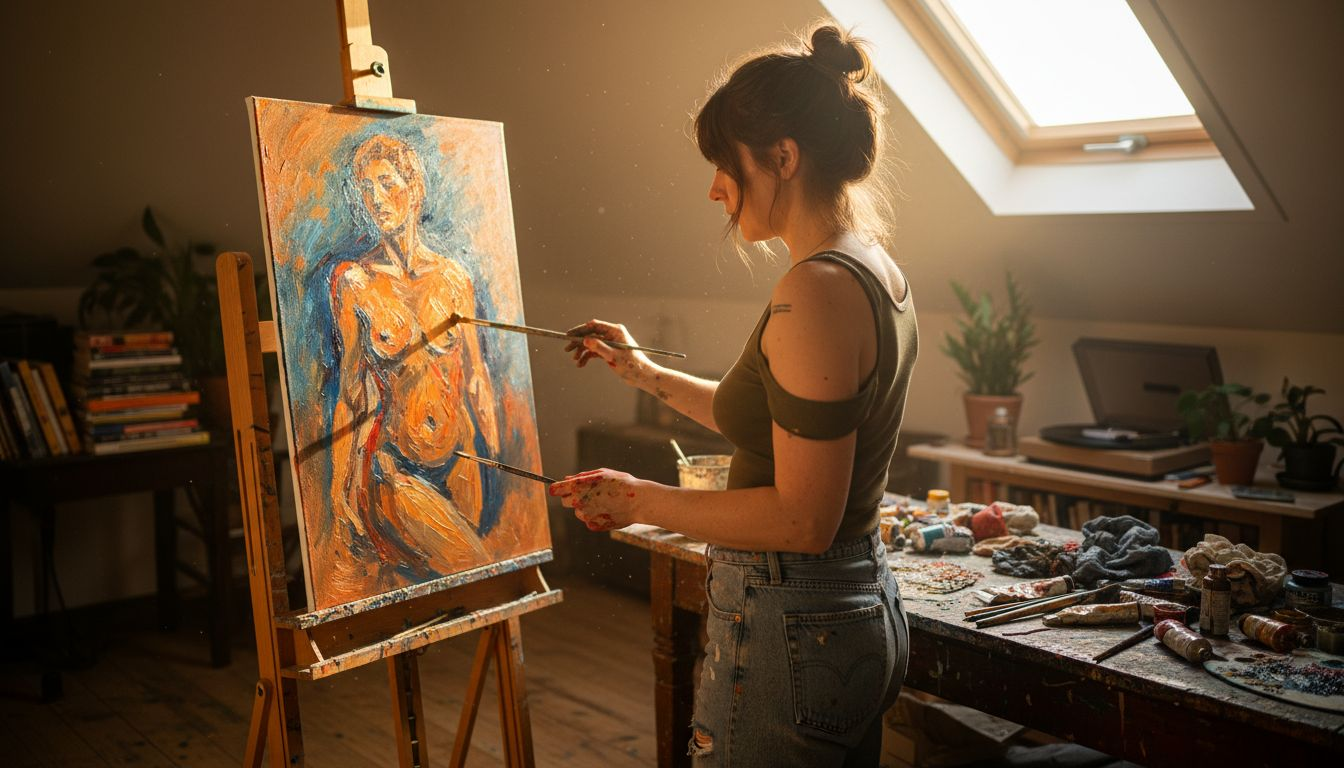
Feminist artistic practices work directly with counter-narratives that transform the female body into one of power and joy, rejecting the shame-based narratives that have dominated your entire existence. When you work with sacred feminine art, you participate in something much larger than personal healing. You join a lineage of women who have used their bodies, their creativity, and their vision to resist patriarchal control. Art becomes a form of protest. A reclamation. A remembrance. Artistic practices function as forms of resistance against patriarchal violence on the feminine body, helping you deconstruct the false imaginaries you have internalized and reconstruct a relationship with your flesh rooted in agency and truth. When you stand before art that celebrates your body, you are standing before your own liberation.
The reclamation happens in layers. First comes recognition: seeing your body reflected as beautiful, sacred, powerful. Then comes permission: allowing yourself to feel pride in your flesh, to occupy space without apology, to claim sensuality as part of your spiritual path. Finally comes integration: your body begins to believe what the art is telling it. Your breath deepens. Your shoulders relax. You stop holding yourself small. When you explore why yoni art and nudity matter for healing and divine feminine expression, you are engaging directly with one of the most powerful tools for reclamation available to you. Your body learns that it is safe. That it is worthy. That its very existence is an act of resistance and a celebration of life force. This is how art heals the feminine body: not through words of affirmation, but through the embodied experience of seeing yourself reflected as sacred.
Pro tip: Spend time each day gazing at sacred feminine art that resonates with you, placing your hand on your heart or belly as you look. Let your body absorb the truth that the art is showing you about your own divinity, without needing to think about it analytically.
Integrating Shadow and Spiritual Energy
There is a part of you that you have learned to hide. Anger. Desire. Hunger. Ambition. The parts of yourself that do not fit into what a “good woman” should be. You have been taught to split yourself in half, keeping the light and rejecting the dark, when in truth both are essential to your wholeness. Shadow integration is not about becoming darker or more negative. It is about reclaiming the full spectrum of your humanity and recognizing that every disowned part of yourself carries vital energy. The shadow holds power, sexuality, rage, and ancient knowing that your conscious self has learned to fear. Art becomes the container where shadow and spiritual energy can finally meet without judgment. When you engage with art that holds both the sacred and the primal, both the light and the dark, you give permission to all of yourself to exist.
Healing does not happen by rejecting what you have deemed unacceptable. True transformation occurs through spiritual growth enabled by creative expression and self-discovery, which allows you to reclaim the disowned parts of yourself with compassion rather than shame. Shadow work through art invites you to look directly at what you have hidden, what makes you uncomfortable, what patriarchy told you was dangerous about being female. Your anger becomes fuel. Your sexuality becomes sacred. Your ambition becomes purpose. Spiritual healing integrates shadow material and light through acknowledging the vital energy within darkness itself, moving beyond false binaries of good and evil into wholeness. When you work with sacred art that depicts the full spectrum of feminine power, you begin to understand that your shadow is not your enemy. It is your ally.
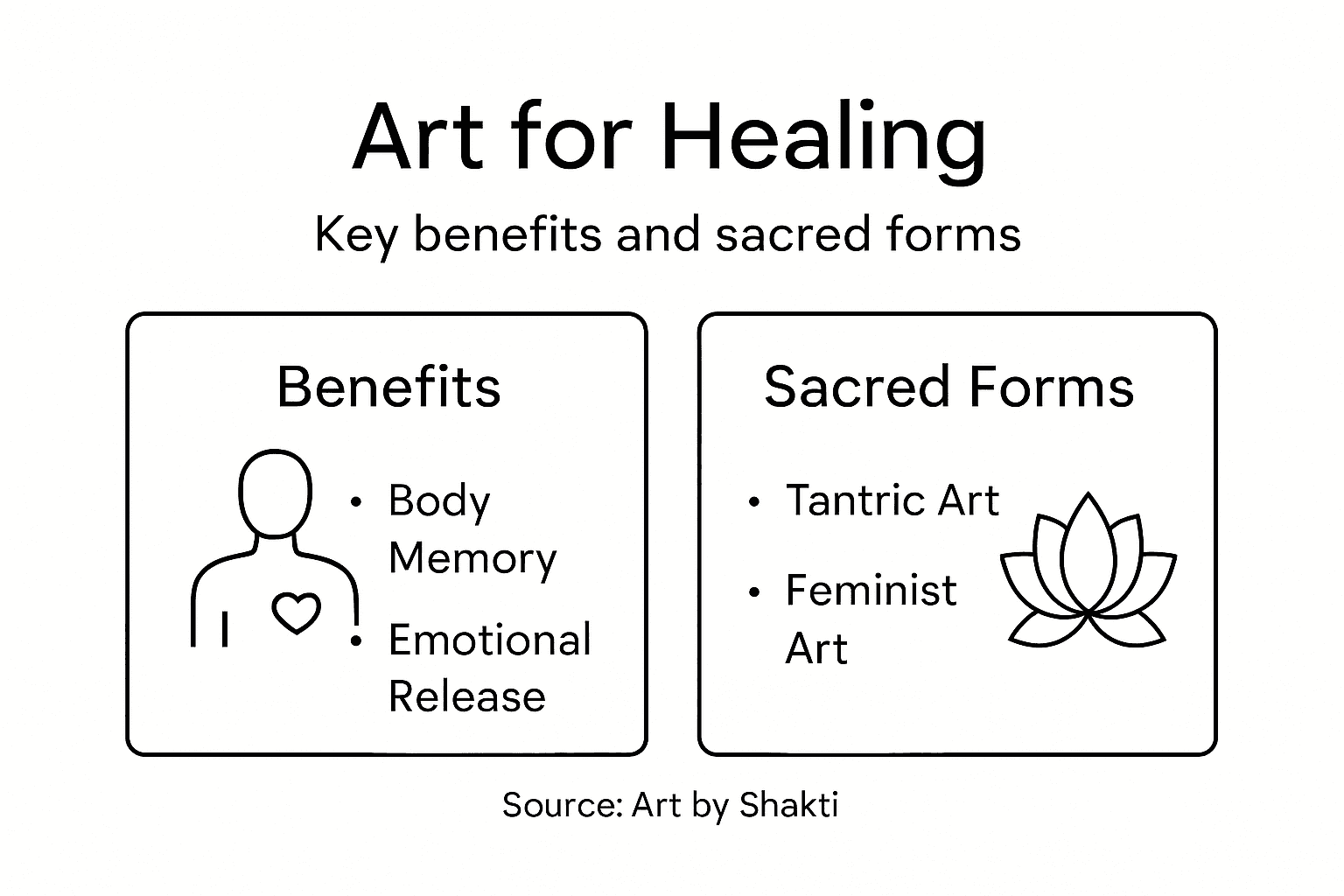
Integrating shadow through art is a specific practice. You might work with images that evoke discomfort, that show feminine rage, sensuality, or power in ways that make you initially recoil. Stay with that recoil. Breathe into it. Ask your body what it needs to say. Let the art hold space for the parts of you that have been silenced. When you explore transformative uses of feminine energy art for healing, you are working directly with integration. You learn that your desires are not shameful. Your power is not dangerous. Your full embodiment, including every shadow, is sacred. This is the liberation that shadow integration offers: not transcendence of your humanity, but total acceptance of it.
Pro tip: When working with art that activates your shadow, journal immediately afterward about what made you uncomfortable and what that discomfort is trying to teach you. Your resistance is information, and it points directly to the healing edge you are ready to cross.
Common Challenges and Misconceptions
When you first approach art for healing, you carry expectations shaped by culture, by previous experiences with therapy, by what you have been told spiritual practice should look like. These expectations often create barriers before you even begin. One of the most persistent misconceptions is that art healing requires you to be artistic, creative, or talented. You are not creating a masterpiece. You are not auditioning for a gallery. The healing happens in the engagement, in the looking, in the feeling, in the way your body responds to the sacred image before you. Another common challenge arises from underestimating art’s accessibility and scalability for marginalized populations, which can make some women feel that healing art is only available to those with resources or connections. The truth is different: sacred art for healing exists at every price point and in every corner of the world. Your body does not care whether you are gazing at an original painting or a high-quality print. The resonance is the same.
Another barrier emerges from the belief that healing art must feel comfortable, that if something triggers you or makes you uneasy, it is not working. This is backwards. The art that creates the most transformation is often the art that activates something in you that has been dormant or hidden. Common challenges in arts and health include misconceptions about subjective taste and gatekeeping about what counts as “real” healing, which can make you doubt whether your own visceral response to art is valid. But your response is valid. If you stand before a painting and tears flow, if your breath catches, if your body trembles, that is the art working exactly as it should. Do not let anyone convince you that your healing needs to look a certain way or follow a particular timeline. Healing is not linear. Some days you engage with gentle, nurturing art. Other days you need fierce, activating images. Both serve your wholeness.
Practical challenges exist as well. Finding sacred art that truly resonates with your specific healing journey takes time and intention. You may encounter art that is labeled “spiritual” but that feels empty or commercialized to you. You may worry about spending money on art when you are already stretched thin. You may feel self-conscious about displaying feminine or sexual imagery in your home because you have internalized shame about your own body. These are real obstacles, and they deserve acknowledgment. Start small. One image. One painting. One piece that makes your heart recognize itself. You do not need to overhaul your entire environment overnight. You do not need to spend thousands of dollars. You simply need to begin where you are, with what resonates, and allow the healing to unfold at its own pace.
The table below clarifies challenges and misconceptions about art-based healing, with practical insights:
| Challenge/Misconception | Underlying Truth | Action to Overcome |
|---|---|---|
| “Must be artistic/talented” | Healing comes from engagement, not skill | Focus on personal response |
| “Art must feel comfortable” | Discomfort can indicate important healing | Stay with challenging pieces |
| “Healing art is unaffordable” | Impact is not tied to cost or exclusivity | Start with small steps |
| “Only certain art is valid” | Personal resonance matters more than approval | Trust your body’s response |
Pro tip: When you encounter resistance to a piece of art, whether financial, emotional, or practical, sit with that resistance instead of pushing past it. Your hesitation is often information about what part of yourself needs attention or permission before you can fully receive the healing the art offers.
Reclaim Your Sacred Self Through Embodied Art
If you resonate with the deep need to heal trauma stored in your body and reclaim your feminine power, you are not alone. The article highlights challenges like internalized shame, patriarchal narratives, and the desire for true embodied transformation. You long for art that does more than decorate your space — art that holds your shadow, activates your sexual energy as sacred, and reconnects you with your life force and inner truth.
At Art by Shakti, you will find original paintings and ritual-based artworks created as living portals. These pieces are designed to support your journey of sacred embodiment, shadow integration, and Kundalini awakening. Each work offers energetic resonance that grounds, heals, and celebrates feminine divinity beyond words. Explore transformative expressions that challenge patriarchy and honor your body as a site of power and pleasure.

Experience the radical healing power of art made specifically for your spiritual and erotic awakening. Visit Art by Shakti now and discover how sacred art can hold space for your full wholeness. Begin your reclamation of body, soul, and divine feminine energy today by choosing pieces that call to your inner knowing and start your path to embodied presence and loving self-connection.
Explore more about divine feminine art as a tantric path and healing through art and transformation to deepen your relationship with the sacred you deserve.
Frequently Asked Questions
What is embodied art and how does it aid healing?
Embodied art engages the physical self in the healing process, activating body perception and spiritual construction for genuine transformation beyond mere visual appreciation.
How do I choose the right sacred art for healing?
Select sacred art that resonates with you personally, focusing on the pieces that evoke strong emotions or a sense of connection to your inner self, rather than what you believe should match your decor.
Can any type of art serve as healing art?
Not all art serves the same function for healing. Sacred art is intentionally created with spiritual purpose, while decorative art may lack the resonance needed for profound healing experiences.
What role does shadow integration play in art-based healing?
Shadow integration involves acknowledging and accepting the hidden parts of yourself through art, allowing you to reclaim vital energy and embrace wholeness by recognizing that both light and dark aspects are essential to your humanity.